













Now Reading: 1km-wide, 100m-thick ice chunk breaks off Greenland glacier
-
01
1km-wide, 100m-thick ice chunk breaks off Greenland glacier



Scientists aboard the UK research ship RRS Sir David Attenborough witnessed an 18-million-tonne chunk of Greenland's Sorgenfri glacier collapse into the ocean on a single evening. The ice wall was 1 km…
The Story in Brief
Scientists aboard the UK research ship RRS Sir David Attenborough witnessed an 18-million-tonne chunk of Greenland's Sorgenfri glacier collapse into the ocean on a single evening. The ice wall was 1 km wide and 100 m thick. The British Antarctic Survey (BAS) released footage of the event on 3 August 2026.
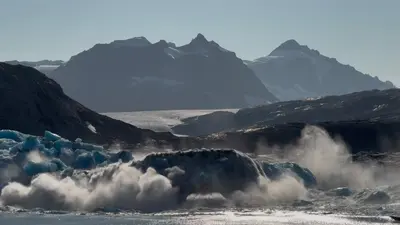
The calving occurred during the GIANT project, a five-year study of how rapid meltwater affects ocean currents. Researchers fear freshwater from Greenland could disrupt the Atlantic Meridional Overturning Circulation (AMOC), which carries warm water north and cools it. The expedition uses a fleet of autonomous robots to measure the glacier face directly, as crewed vessels cannot get close safely.
The Indian Opinion
Glacier calving is natural, but the speed and scale of Greenland's ice loss are not. The GIANT expedition's data will settle whether this event is a blip or a sign of faster collapse. The real test is the freshwater volume entering the North Atlantic, too much could slow the ocean conveyor belt that keeps Europe's weather stable. Watch for the next generation of UK climate models incorporating these measurements.
Source: timesofindia.indiatimes.com
This story was synthesised by AI from the source linked above.
Updated: this story now draws on 1 sources.