












Now Reading: Himalayan glaciers melting 65% faster, risk 20% of India’s GDP
-
01
Himalayan glaciers melting 65% faster, risk 20% of India’s GDP


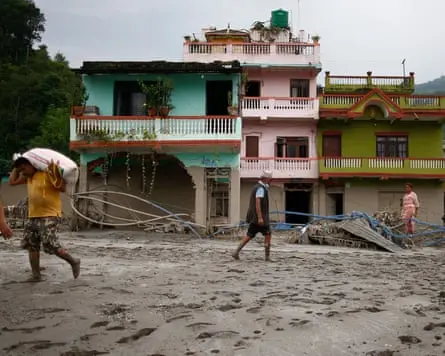
Himalayan glaciers are losing mass 65% faster than a decade ago, and only 21 of roughly 40,000 glaciers are being monitored on the ground, a new study by Systemiq, ICIMOD and GB…
Himalayan glaciers are losing mass 65% faster than a decade ago, and only 21 of roughly 40,000 glaciers are being monitored on the ground, a new study by Systemiq, ICIMOD and GB Pant Institute warns. The findings follow the catastrophic collapse of a glacier on the Nepal-Tibet border in late August, which triggered flash floods that have killed more than 1,300 people and left over 5,300 missing across both countries.
The study estimates that Himalayan water underpins about 20 per cent of India's GDP, sustaining crops, hydropower and pilgrimage, but the mountain states capture only 5 per cent of that value. India's government has classified 56 glacial lakes as 'very high risk' and is monitoring 2,485 lakes. The report attributes roughly a third of glacier melt to black carbon from brick kilns, a pollutant India can cut directly. It proposes 10 priorities, including expanding monitoring, improving early-warning systems and rethinking tourism, which draws 400 million visits a year to the Indian Himalayan region.
Indian Opinion Analysis
The BBC, Guardian and SCMP reports all centre on the same Systemiq study and the Nepal-Tibet disaster, but their lead framings differ sharply. The BBC leads with the economic risk to India, 20 per cent of GDP, and the government's admission of 56 high-risk lakes, a largely neutral-report stance that gives weight to official data. The Guardian foregrounds the human catastrophe: the missing Indians, overflowing morgues, and climate-change attribution, adopting a government-critical tone by emphasising unaddressed risks. The SCMP uses the dramatic 'glacier bankruptcy' framing and the extreme missing count of 5,300, bordering on sensationalist. Together, the coverage shows that while the science is agreed, the story's entry point, economic dependency versus humanitarian toll versus disaster spectacle, shapes the urgency conveyed. The next hard data point is the government's response to the 56 classified lakes, which move from classification to action.
Coverage: 8 sources, 2 government-critical, 5 neutral, 1 sensationalist
Sources (8): bbc.co.uk (neutral report), theguardian.com (government critical), bbc.com (neutral report), scmp.com (sensationalist), bbc.co.uk (2) (neutral report), bbc.co.uk (3) (neutral report), theguardian.com (2) (government critical), theguardian.com (3) (neutral report)
This brief was synthesised by AI from the 8 sources linked above, so one read covers every framing they carry.
Updated: this story now draws on 8 sources.