




Now Reading: 45 women autorickshaw drivers build lives of self-reliance in Mysuru
-
01
45 women autorickshaw drivers build lives of self-reliance in Mysuru


The Story in Brief
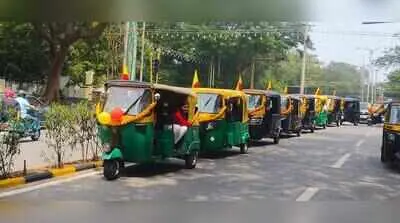
Forty-five women in Mysuru are earning a livelihood as autorickshaw drivers, becoming sole breadwinners for their families after losing male support. The Hindu reports that trained by the Taliru Foundation, drivers like Uma and Manasa earn ₹1,000 a day, rising to ₹1,500 to 2,000 during festivals. Many switched from low-wage jobs as security guards or factory workers and report incomes three to five times higher.
On Sunday, 1 November, about 35 women under the banner 'Auto Sakhiyaru' held a procession for Kannada Rajyotsava, waving Kannada flags. The Times of India reports they pledged free rides for visually impaired children, pregnant women and economically disadvantaged senior citizens. Taliru Foundation founder Chitra A.R. said obtaining loans remains a challenge, as male surety is often required. The foundation plans to train more women to drive school buses.
Indian Opinion Analysis
Both stories report from the same Rajyotsava procession and quote the same women drivers and foundation. The Hindu leads with a feature on income and dignity, describing individual journeys of Uma, Lakshmi, Manasa and Manjula in detail, and foregrounds the loan-access hurdle for women. The Times of India leads with the event itself and the free-ride pledge, framing it as a community-service story. Neither outlet criticises any government body or policy, both maintain a neutral-report tone. The balanced reading: a news feature and an event report cover the same initiative but choose different entry points, personal empowerment versus celebratory pledge, without contradicting each other. The sources name no government action or next step beyond the foundation's own ambition to train more women bus drivers.
Coverage: 2 sources, 2 neutral
Sources (2): thehindu.com (neutral report), timesofindia.indiatimes.com (neutral report)
This brief was synthesised by AI from the 2 sources linked above, so one read covers every framing they carry. Methodology and corrections.