







Now Reading: AI Watermarks Go Invisible as Google and Anthropic Change Policies
-
01
AI Watermarks Go Invisible as Google and Anthropic Change Policies


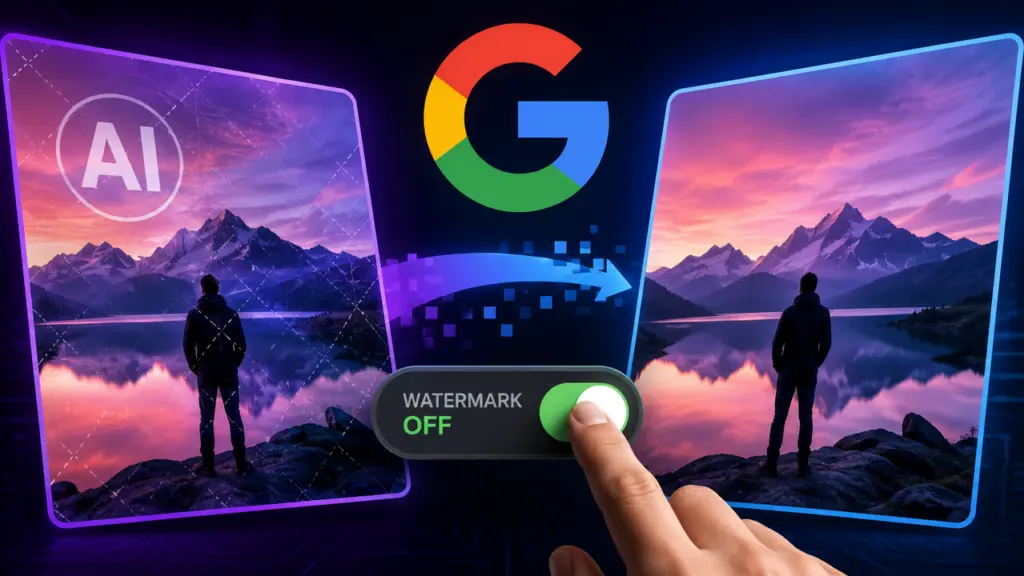
Google will let users hide visible watermarks on AI-generated images from Nano Banana, Omni and Lyria, with the setting planned for Gemini and its video editor. The company says invisible SynthID marks…
The Story in Brief
Google will let users hide visible watermarks on AI-generated images from Nano Banana, Omni and Lyria, with the setting planned for Gemini and its video editor. The company says invisible SynthID marks and C2PA metadata will remain. Anthropic, meanwhile, plans machine-readable watermarks in Claude-generated or processed text worldwide, alongside provenance metadata for supported image files, to meet the European Union’s AI Act requirements.
These systems are not foolproof. Ars Technica found that a 20% crop after heavy compression could make Google’s SynthID undetectable. Anthropic also warns that its text marks can produce false positives and false negatives, especially after editing, format conversion or use of unsupported tools. Users may therefore see fewer visible warnings while verification increasingly depends on specialised checks.
The Indian Opinion
The lazy claim that invisible marks will make every fake undetectable is wrong, just as the belief that a watermark proves authorship is too confident. Google’s marker can survive common changes, but not every crop or attack. Anthropic says its mark may survive editing, yet it cannot establish who created the work. The practical test is whether platforms make these checks easy for ordinary users, and how often they correctly identify altered content.
Sources (2): thehindu.com, timesnownews.com
This story was synthesised by AI from the 2 sources linked above.
Updated: this story now draws on 2 sources.