











Now Reading: Bengaluru startup tests satellite jetpack for ageing spacecraft
-
01
Bengaluru startup tests satellite jetpack for ageing spacecraft



Bengaluru startup Aule Space has tested its camera-based guidance, navigation and control system at ISRO’s Rendezvous Simulation Laboratory, which also supported validation work for the SpaDeX mission. The company is developing small…
The Story in Brief
Bengaluru startup Aule Space has tested its camera-based guidance, navigation and control system at ISRO’s Rendezvous Simulation Laboratory, which also supported validation work for the SpaDeX mission. The company is developing small “jetpack” satellites that could dock with ageing communication satellites and take over station-keeping after their fuel runs out.
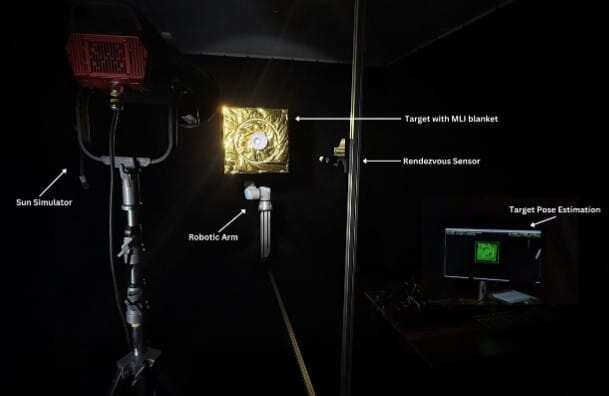
Aule plans to attach its spacecraft to the liquid apogee motor nozzle, rather than use a dedicated docking port. It says each jetpack could extend a satellite’s working life by up to five years. The company plans an in-orbit demonstration next year with two satellites in low Earth orbit. CEO Jay Panchal claims it could be the first private camera-only, non-cooperative docking mission in LEO.
The Indian Opinion
The “power bank” label makes the idea easy to grasp, but it can also make a difficult operation sound routine. Claims about saving satellites worth hundreds of millions of dollars will matter only after a spacecraft docks safely with an unprepared target and controls its orbit. A camera-only system may cut hardware costs, yet lighting, movement and failure recovery will test it sharply. The next useful measure is whether Aule completes its planned LEO demonstration, not whether it wins a first-of-its-kind description.
Sources (2): timesofindia.indiatimes.com, timesofindia.indiatimes.com (2)
This story was synthesised by AI from the 2 sources linked above.
Updated: this story now draws on 2 sources.