














Now Reading: Centre working on new subsidy scheme for polysilicon manufacturing
-
01
Centre working on new subsidy scheme for polysilicon manufacturing


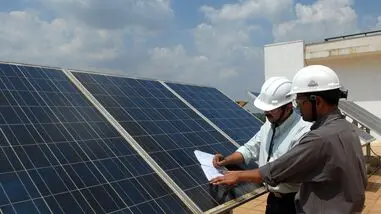
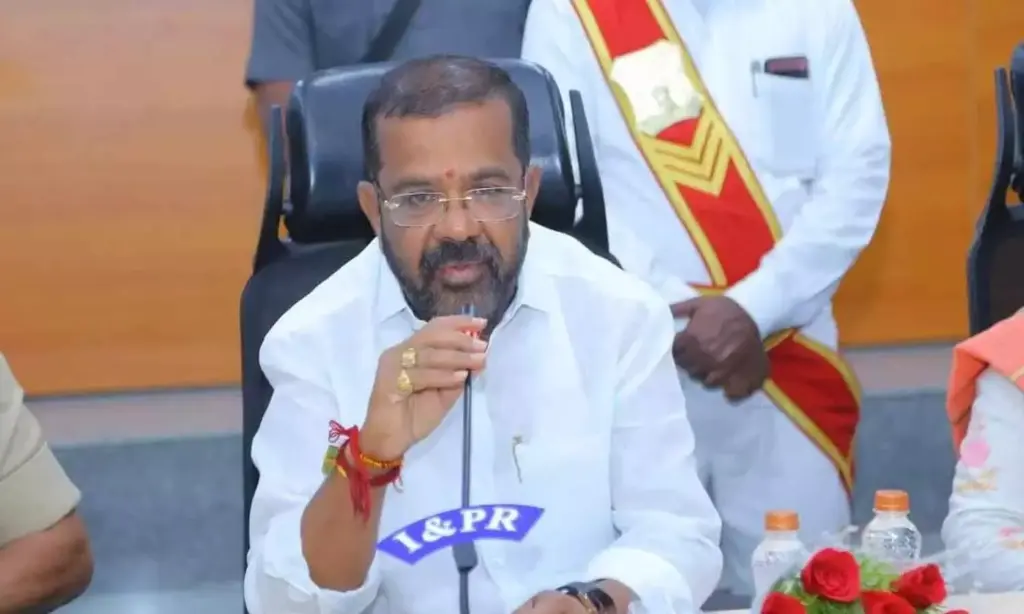
The government is working on a new subsidy scheme to support domestic manufacturing of polysilicon, a key component for solar modules, Union New and Renewable Energy Secretary Santosh Sarangi said on Friday. Speaking on the sidelines of the Bloomberg New Energy Finance Summit 2026, Sarangi said India needs at least 30 GW of polysilicon manufacturing capacity by 2030, requiring an estimated investment of Rs 25,000 crore.

The existing production-linked incentive (PLI) scheme focused mainly on solar modules and cells, with very small capacity for polysilicon. The new scheme would provide subsidies for polysilicon manufacturing, which costs about Rs 850 crore per GW. The Hindu reports that 42 GW of planned solar capacity lacks offtake agreements, including 18 GW of solar-only projects. Livemint reports the Centre is also working on a scheme for wafers and ingots.
Sarangi said India's energy transition will need $500 billion investment by 2030 and $13 trillion to reach net-zero by 2070. China currently dominates solar manufacturing, and India aims to reduce import dependence as it targets 500 GW of non-fossil capacity by 2030, with about 300 GW from solar.
Indian Opinion Analysis
Both sources report the same core facts neutrally, but The Hindu adds a specific warning: 42 GW of planned solar capacity has no offtake buyers, suggesting demand-side risk the government must solve alongside supply. Livemint emphasises the investment figures and broader energy transition context, including data-centre growth and battery technology. The coverage is straight reporting with no editorial slant. The measured takeaway: the government acknowledges the existing PLI scheme is insufficient for polysilicon, so it is designing a targeted subsidy, but demand certainty remains a separate, unresolved challenge. Watch for the scheme's formal announcement and whether offtake agreements improve.
Coverage: 2 sources, 2 neutral
Sources (2): thehindu.com (neutral report), livemint.com (neutral report)
This story was synthesised by AI from the 2 sources linked above. Methodology and corrections.