















Now Reading: El Niño may become strongest in history, threatens Indian monsoon and economy
-
01
El Niño may become strongest in history, threatens Indian monsoon and economy

El Niño may become strongest in history, threatens Indian monsoon and economy

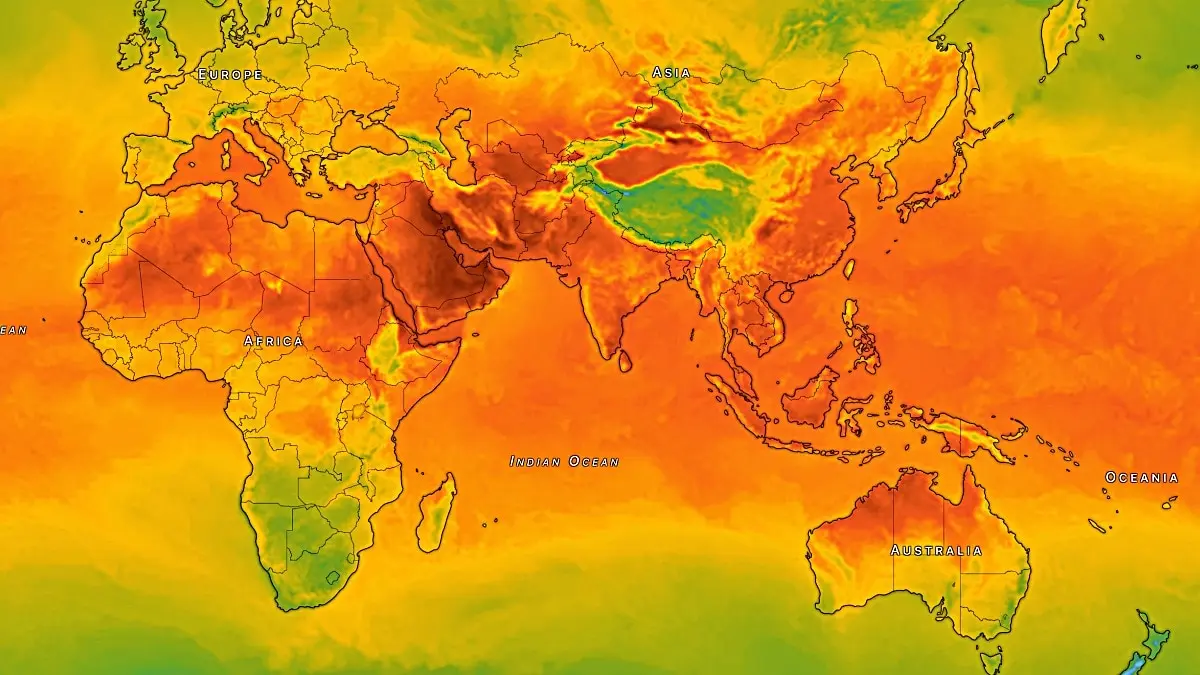
A powerful El Niño developing over the Pacific Ocean could become the strongest in living memory, with sea surface temperatures already more than 2°C above normal. The UK Met Office expects the anomaly to exceed 3°C later this year, an unprecedented level since records began in 1950. Scientists warn that if the event peaks by December 2026, 2027 could become the hottest year on record, surpassing 2024.

For India, the immediate risk is to the southwest monsoon. The India Meteorological Department has forecast below normal rainfall, and June 2026 already recorded a steep deficit across central, eastern and northeastern India. Agriculture depends on the monsoon for nearly half the country's net sown area, and weak rainfall can push up food inflation, strain water resources, and reduce rural demand. The Reserve Bank of India is particularly concerned about persistent food inflation limiting its ability to cut interest rates.
Researchers project that El Niño-driven losses from the 1997-98 event cost the global economy an estimated $5.7 trillion. A landmark study in Science warns that climate change is intensifying El Niño-Southern Oscillation variability, potentially causing $84 trillion in cumulative global losses this century. India's key question is whether the exceptional Pacific warming will worsen drought risks and trigger cascading effects on agriculture, prices, and the broader economy.
Indian Opinion Analysis
All three sources treat the developing El Niño as a serious economic and agricultural risk for India, but with different emphases. India Today leads with the global dollar-loss figures from the Science study and frames the event as an unprecedented economic threat, warning that the 2026 event could surpass the 1997-98 disaster. Times Now focuses on the UK Met Office's statement that the anomaly could exceed 3°C above normal, quoting scientists calling it 'unprecedented' and raising the possibility of 2027 becoming the hottest year on record. BusinessLine takes a measured, explanatory approach, detailing the transmission channels, farm income, inflation, rural demand, fiscal policy, and the Indian Ocean Dipole interaction, without the crisis language. A careful reader should note that all sources agree on the broad scientific facts: a strong El Niño is developing, the monsoon is below normal, and risks to agriculture and inflation are real. The overstatement risk is in labelling this 'the strongest in history' while actual strength will only be known after it peaks. Watch IMD's monsoon update in September 2026 for the kharif crop impact.
Coverage: 3 sources, 1 neutral, 2 sensationalist
Sources (3): indiatoday.in (sensationalist), thehindubusinessline.com (neutral report), timesnownews.com (sensationalist)
This story was synthesised by AI from the 3 sources linked above. Methodology and corrections.
Updated: this story now draws on 3 sources.