




















Now Reading: Climate models failed to predict 2026 monsoon’s erratic shifts
-
01
Climate models failed to predict 2026 monsoon’s erratic shifts


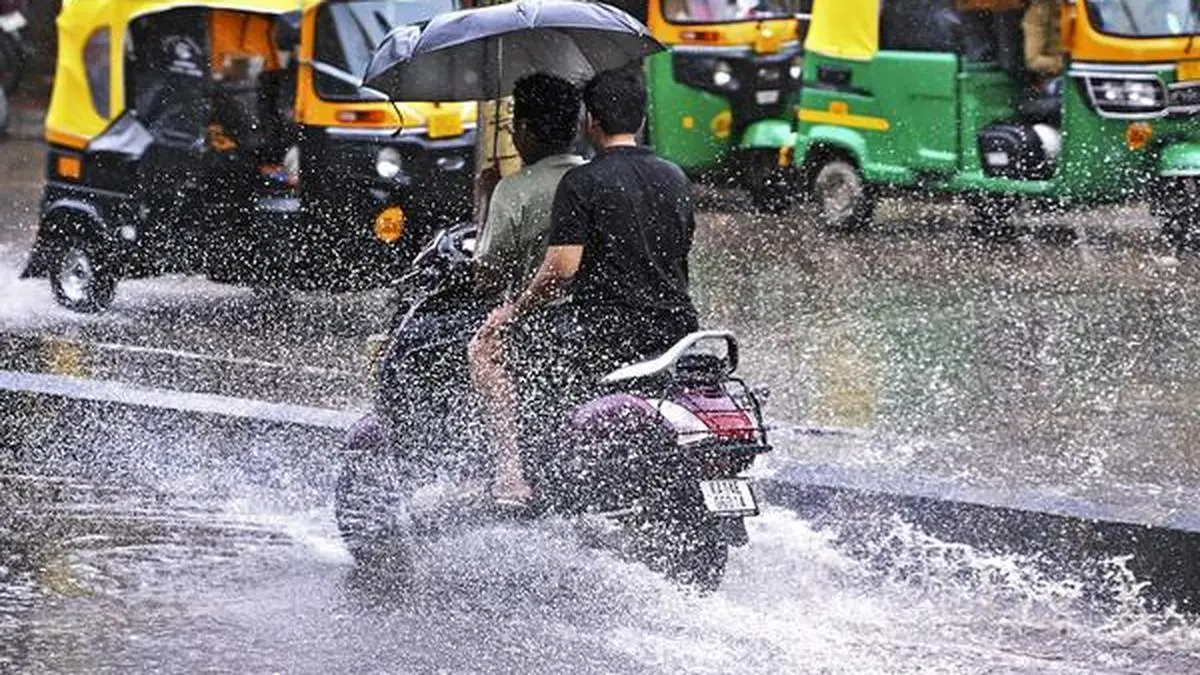
Climate models accurately predicted the 2026 El Niño and a monsoon deficit of over 10%, but they failed to capture the rapid and unprecedented space-time evolution of the monsoon this year. While the seasonal total for the all-India monsoon rainfall (AIMR) may validate forecasts, the erratic swings, June rainfall 40% below normal and July recovering to 1% above normal, were not forecast even days in advance.
India's multi-tiered prediction systems cover short to extended ranges, but long-lead forecasts of spatial and temporal monsoon evolution face irreducible uncertainties. Experts note that the El Niño is predictable 80% of the time, but monsoon predictability hovers around 60%, making failures more likely. The key question is whether 2026 was an aberration or a trend driven by El Niño and global warming, and how models must adapt.
The most promising avenue for improvement is combining AI with climate models to extract patterns from data, overcoming the current lack of mechanistic understanding. However, sufficient data covering all monsoon drivers and local amplifiers like urbanisation is critical. Public-private partnerships and new technologies are expected to grow data volume and improve sector-specific advisories.
Indian Opinion Analysis
India's monsoon prediction system, built over decades by the India Meteorological Department, relies on statistical and dynamical models that have historically struggled with subseasonal variability. The 2026 failure echoes the 2023 forecast, where models got the seasonal total right but missed regional extremes. Under the National Monsoon Mission, the government has invested in high-resolution models, but the unpredictability of active-break cycles, worsened by climate change, tests their limits. The real concern is not the seasonal deficit but the spatial distribution: even a normal AIMR can hide severe local deficits that devastate rain-fed agriculture, which employs nearly half the country. The upcoming task for the Ministry of Earth Sciences is to decide whether to prioritise AI-driven downscaling or improve physics-based models, a choice with implications for 120 million farmers.
Source: thehindu.com
This brief was synthesised by AI from the source linked above. Methodology and corrections.