




















Now Reading: Pacific warming may raise cyclone frequency over Indian coast: study
-
01
Pacific warming may raise cyclone frequency over Indian coast: study


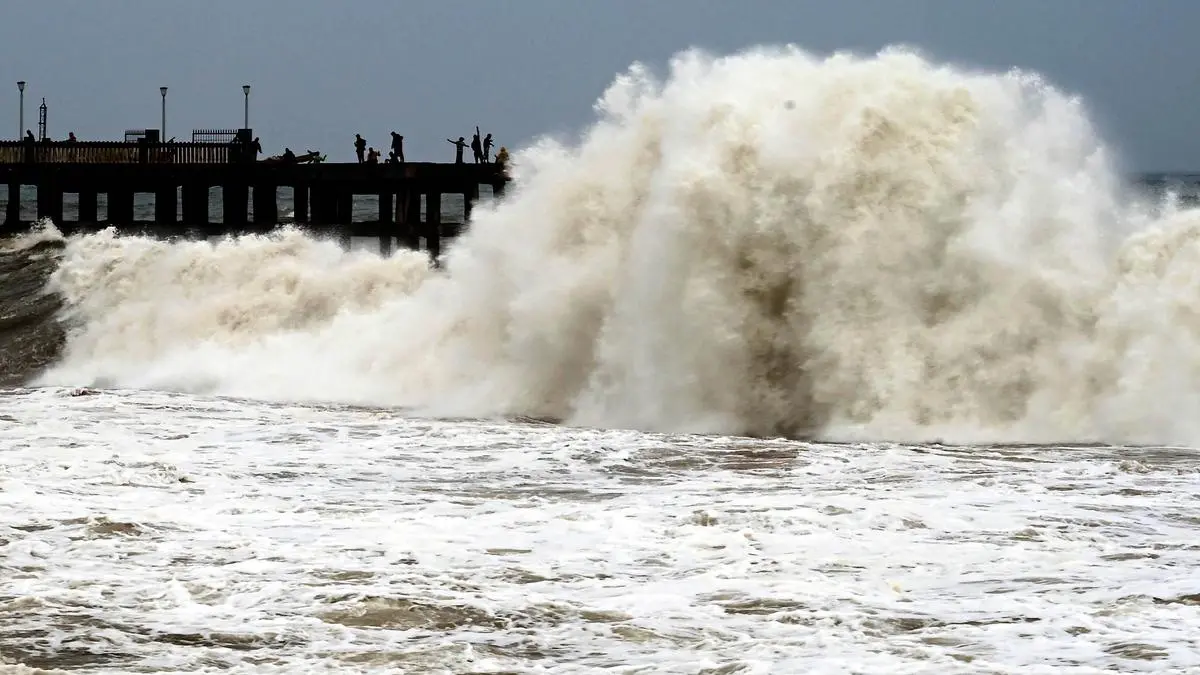
A new study published in Nature Communications warns that tropical cyclones originating near the Equator could become more frequent along Indian coasts due to global warming and a long-term Pacific Ocean pattern called the Pacific Decadal Oscillation (PDO). Such cyclones were 43% fewer between 1981 and 2010 compared to 1951-1980, because the PDO was in a warmer phase.
The PDO has entered a cooler, negative phase since 2019, which could mean more post-monsoon cyclones near the Equator, according to meteorologist R.S. Ajayamohan. The 2017 Cyclone Ockhi, which devastated Kerala, Tamil Nadu and Sri Lanka, was the last major equatorial-origin cyclone in the region. An El Niño is currently developing in the Pacific, linked to rainfall deficits of 7% in central India and 17% in southern India.
Indian Opinion Analysis
The Pacific Decadal Oscillation (PDO) is a lesser-known cousin of the El Niño-Southern Oscillation (ENSO), operating over decades rather than years. While ENSO shifts are tracked monthly, a PDO phase becomes evident only after years of data, making its forecasting difficult. For India, a negative PDO has historically been associated with stronger monsoons and more equatorial cyclones, but the mechanism is not well understood. The Indian Meteorological Department does not currently factor PDO into its seasonal forecasts. If the negative PDO persists through 2024, the post-monsoon cyclone season could see heightened activity, challenging disaster preparedness from Chennai to Kutch.
Source: thehindu.com
This brief was synthesised by AI from the source linked above. Methodology and corrections.