






















Now Reading: IITM Pune predicts El Nino may last until February 2027
-
01
IITM Pune predicts El Nino may last until February 2027


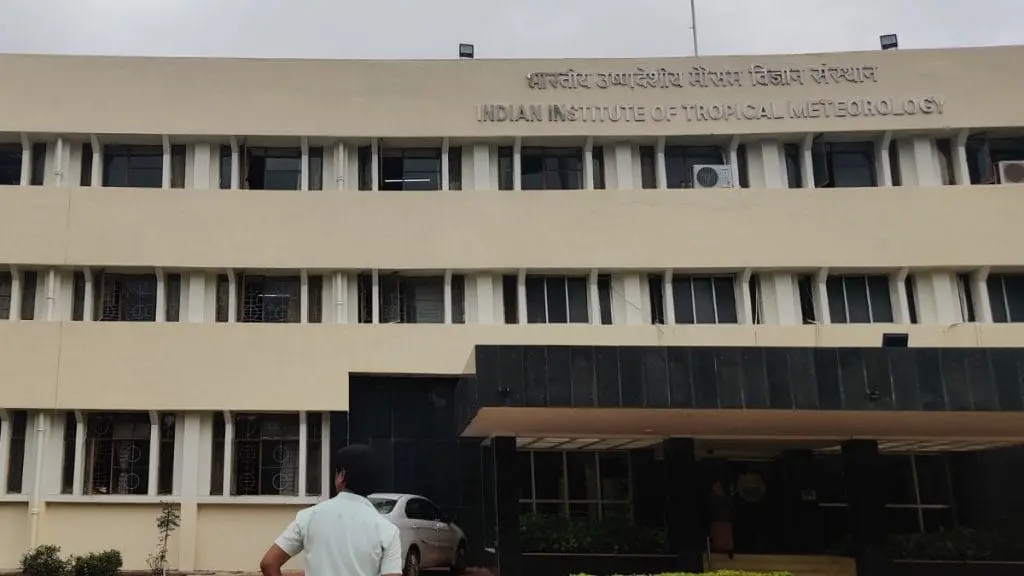
The Indian Institute of Tropical Meteorology (IITM) in Pune has assessed that the El Nino weather pattern is likely to persist until February 2027, with a 70 to 90 percent probability. This could lead to a warmer winter and a record-breaking summer next year. The 64-year-old institute, under the Ministry of Earth Sciences, is the research engine behind much of India's weather science, building and improving forecast models.
IITM's supercomputer Arka, capable of 11.77 petaflops, now models weather at a 6-km resolution under the Bharat Forecast System launched in May 2025. The institute plans to improve resolution to 3 km by 2028 under Mission Mausam. Scientists are studying the tropics, where weather changes rapidly, and working on predicting the monsoon through large-scale mathematical models.
Indian Opinion Analysis
IITM's El Nino forecast is based on global ocean-atmosphere models, but predicting tropical weather remains harder than mid-latitude forecasting because smaller-scale systems dominate. The institute's shift from 12-km to 6-km resolution modelling is significant: each doubling of resolution requires roughly eight times the computing power, which Arka now provides. The real test of the new Bharat Forecast System will come during the 2026 monsoon season, when the 6-km model's ability to predict localised heavy rain events will be compared against actual rainfall data from the IMD's ground network. Mission Mausam's 2028 target for 3-km resolution depends on Arka's successor or an upgrade.
Source: theprint.in
This brief was synthesised by AI from the source linked above. Methodology and corrections.