














Now Reading: Freelancers face Aug 31 ITR deadline, choose ITR-3 or ITR-4
-
01
Freelancers face Aug 31 ITR deadline, choose ITR-3 or ITR-4



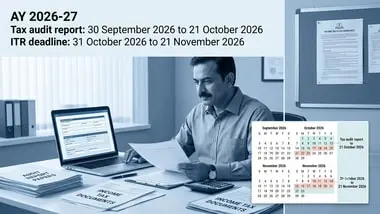
Freelancers and self-employed professionals must file income tax returns by August 31, 2026, for assessment year 2026-27, unless a tax audit applies, which extends the deadline to October 31, 2026. Unlike salaried…
The Story in Brief
Freelancers and self-employed professionals must file income tax returns by August 31, 2026, for assessment year 2026-27, unless a tax audit applies, which extends the deadline to October 31, 2026. Unlike salaried staff, freelancers report income from multiple clients and foreign sources, which is fully taxable in India. Livemint reports that freelancers who opt for presumptive taxation under Section 44ADA can use ITR-4, while those maintaining regular books or having capital gains above Rs 1.25 lakh must file ITR-3. The income tax department has also released online and offline utilities for ITR-5, used by firms, LLPs, AOPs and cooperative societies, with similar deadlines. Freelancers with foreign clients must pay advance tax if total liability exceeds Rs 10,000, as foreign clients rarely deduct Indian TDS.


The Indian Opinion
Much of the freelancer ITR advice treats foreign income as exotic, but the real friction is India treating it as fully taxable while clients abroad deduct nothing at source. Advance tax rules already cover this gap. One test to watch is whether the Central Board of Direct Taxes will simplify Form 67 or let the new income-tax bill ease the documentation load. A crore-odd self-employed wait.
Sources (2): livemint.com, livemint.com (2)
This story was synthesised by AI from the 2 sources linked above.
Updated: this story now draws on 2 sources.