














Now Reading: SC slams FSSAI for delaying warning labels on junk food
-
01
SC slams FSSAI for delaying warning labels on junk food



The Supreme Court on Thursday sharply questioned the FSSAI over its reluctance to introduce warning labels on packaged foods high in sugar, salt and saturated fat. A bench of Justices JB Pardiwala…
The Story in Brief
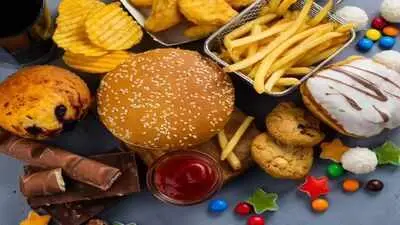
The Supreme Court on Thursday sharply questioned the FSSAI over its reluctance to introduce warning labels on packaged foods high in sugar, salt and saturated fat. A bench of Justices JB Pardiwala and KV Viswanathan asked whether the regulator did not want people to stay healthy, especially children, and if it was giving in to pressure from the food industry. The court gave the Centre and FSSAI two weeks to place their final decision before it.

Separately, the FSSAI has proposed limits on high-fat, sugar and salt (HFSS) foods in and around schools, inviting objections within 60 days. For solid foods, the proposed high limits per 100g are: added fat over 4.2g, added sugar over 3g, and added salt over 0.625g. However, the Times of India reports that in a Supreme Court affidavit, FSSAI cited industry opposition to warning labels and suggested a nutritional table instead, a move consumer activists call a defiance of the court’s order.
The Indian Opinion
The FSSAI has been caught between the food industry’s lobby and the Supreme Court’s push for public health. The regulator’s suggestion of a nutritional table instead of warning labels forces shoppers to do mental arithmetic in aisles, hardly helpful for busy parents buying snacks for children. Activists rightly call this defiance. Meanwhile, the school-food proposal is still in consultation. The real test: will the FSSAI, under court deadline, actually adopt warning labels, or will it keep offering half-measures that protect commercial interests over children’s health? The two-week deadline will tell.
Sources (3): timesnownews.com, timesofindia.indiatimes.com, indiatoday.in
This story was synthesised by AI from the 3 sources linked above.
Updated: this story now draws on 3 sources.