








Now Reading: Gujarat HC rejects Kejriwal appeal in PM Modi degree case
-
01
Gujarat HC rejects Kejriwal appeal in PM Modi degree case


The Story in Brief
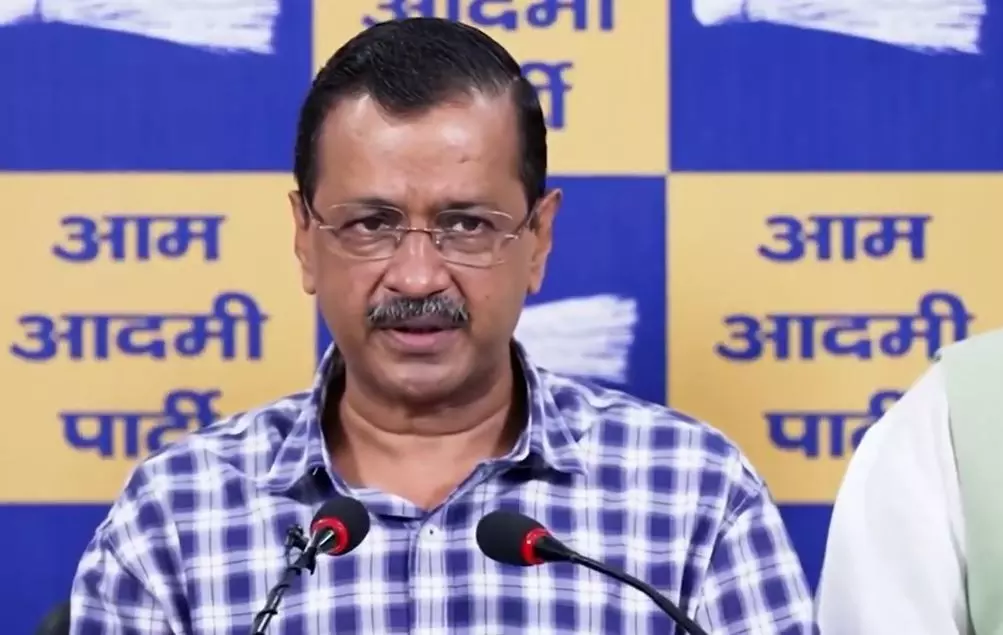
The Gujarat High Court on Tuesday, 29 September 2026, dismissed AAP convenor Arvind Kejriwal’s appeal against a March 2023 order that quashed a 2016 CIC directive for Gujarat University to disclose Prime Minister Narendra Modi’s academic degree. A division bench of Chief Justice Sunita Agarwal and Justice D.N. Ray upheld the single-judge order and the Rs 25,000 cost imposed on Kejriwal, finding ‘no error’ in the impugned judgment. The court observed that the CIC’s suo-motu action was ‘completely outside the scope of the RTI Act’ and that a PM’s educational qualification is ‘personal information’ exempt from disclosure under Section 8(1)(j), with no larger public interest established.
Kejriwal’s counsel Abhishek Manu Singhvi had argued his client did not ‘persist’ in seeking the degree and that the CIC acted on a letter, not a formal application. Solicitor General Tushar Mehta, for the university, said Kejriwal held press conferences to defame the institution and urged costs to prevent RTI misuse. The case originated in 2016 when Kejriwal wrote to the CIC demanding the degree be made public. The order ends the decade-long legal battle in this forum.
Update, 30 September 2026: LiveLaw reports the court held that a PM’s educational degree is ‘personal information’ exempt from RTI disclosure under Section 8(1)(j), with no larger public interest, and that the CIC’s suo-motu order was ‘completely outside the scope of the RTI Act’. Hindustan Times also reports the dismissal but adds no new legal findings.
Indian Opinion Analysis
LiveLaw’s two reports are the only sources that carry the court’s detailed legal reasoning: that a PM’s degree is ‘personal information’ exempt under Section 8(1)(j) and that the CIC’s suo-motu action was ‘outside the scope of the RTI Act’. The other five outlets (The Hindu, Times of India, Hindustan Times, The Federal, Deccan Herald) report the same outcome, dismissal and Rs 25,000 cost, without those legal findings. Their coverage is uniform wire-style reporting. The difference is one of depth, not slant: LiveLaw provides the judgment’s text-based rationale, while the others summarise the procedural history and party submissions. The balanced reading is that the court has now closed the procedural avenue while leaving the substantive RTI exemption point settled in its own reasoning.
Coverage: 7 sources, 7 neutral
Sources (7): thehindu.com (neutral report), thefederal.com (neutral report), timesofindia.indiatimes.com (neutral report), deccanherald.com (neutral report), hindustantimes.com (neutral report), livelaw.in (neutral report), livelaw.in (2) (neutral report)
This brief was synthesised by AI from the 7 sources linked above, so one read covers every framing they carry. Methodology and corrections.