

















Now Reading: India sees export opening in Canada amid US trade tensions
-
01
India sees export opening in Canada amid US trade tensions


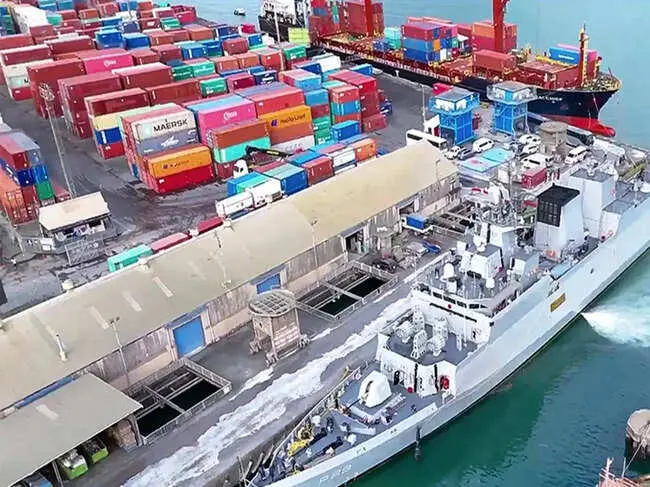
India could find fresh export opportunities in Canada as bilateral economic ties strengthen and Ottawa's trade tensions with the US reshape its import landscape, according to an analysis by Rubix Data Sciences.
India could find fresh export opportunities in Canada as bilateral economic ties strengthen and Ottawa's trade tensions with the US reshape its import landscape, according to an analysis by Rubix Data Sciences.
India and Canada are targeting two-way trade in goods and services of $50 billion by 2030, with negotiations for a Comprehensive Economic Partnership Agreement launched in March 2026 already in their third round. India's goods exports to Canada grew to $4.7 billion in FY2026 from $3.8 billion in FY2022, a compound annual growth rate of 6%, while imports from Canada fell sharply, turning a $0.2 billion trade deficit into a $1.4 billion surplus.
Canada plans to levy counter-tariffs of 15%, 25% and 50% on specified US products from September 8, covering sectors including steel, appliances and electronics. India already has established exports of around $1 billion in these focus sectors, with machinery and mechanical appliances leading at $379.44 million, followed by articles of iron and steel at $292.51 million.
Indian Opinion Analysis
The tariff opening is significant because Canada is one of the few large economies where India runs a trade surplus, a rarity given India's chronic deficit with China and the Gulf. The $1.4 billion surplus in FY2026 is the strongest in five years, driven largely by a drop in Canadian imports. Whether India can convert the tariff window into sustained gains depends on its ability to match US product specifications and pricing under the Canada-India CEPA talks, which are still at an early stage. The third round of negotiations is underway, and the retaliatory tariffs take effect on September 8, giving Indian exporters a narrow window to position themselves.
Source: economictimes.indiatimes.com
This brief was synthesised by AI from the source linked above.