






















Now Reading: Indian stargazer chases solar eclipses across continents for decades
-
01
Indian stargazer chases solar eclipses across continents for decades

Indian stargazer chases solar eclipses across continents for decades

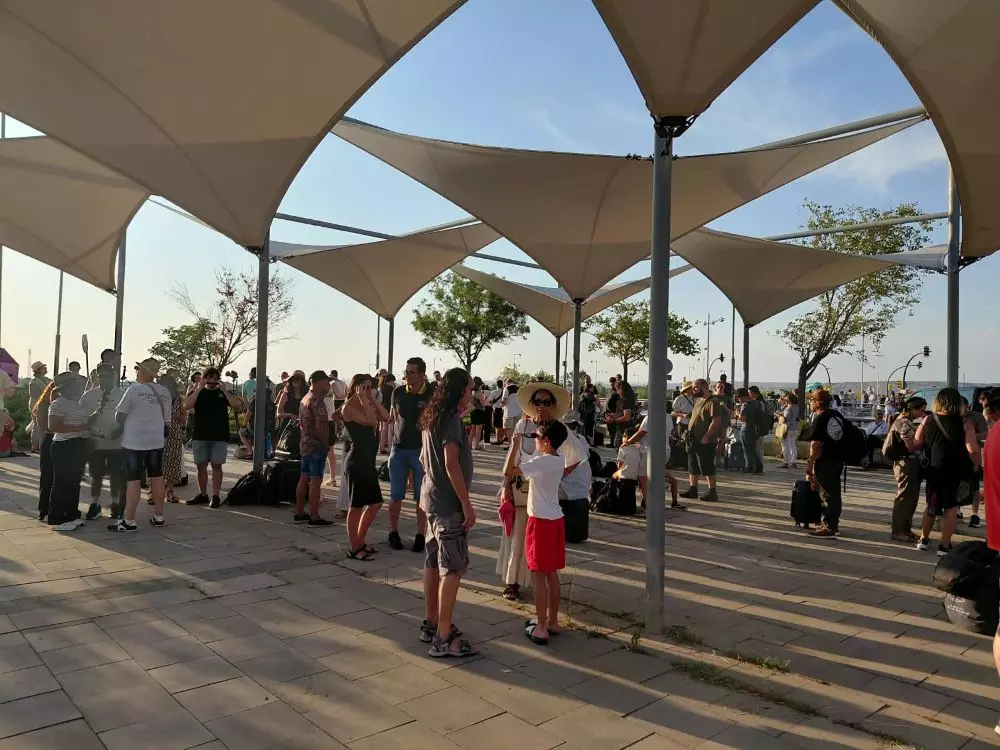
T R Govindarajan, an Indian astronomy enthusiast, recently travelled to Zaragoza, Spain, to witness a total solar eclipse on August 12. The eclipse, which reached totality for 90 seconds at 8:29 pm…
T R Govindarajan, an Indian astronomy enthusiast, recently travelled to Zaragoza, Spain, to witness a total solar eclipse on August 12. The eclipse, which reached totality for 90 seconds at 8:29 pm local time, drew millions across Europe. Govindarajan, who has been chasing eclipses since 1980, noted that in India superstitions once kept people indoors, with streets empty during the 1980 Andhra eclipse.
He recalled how Aryabhata debunked the Rahu-Ketu myth by calling them shadow planets. Over time, science outreach changed public perception: in 1995, lakhs gathered in Agra, Allahabad and Kolkata to see an eclipse, and in 2009 thousands waited at Patna Maidan, though clouds blocked the view. The next total eclipse visible from India is in 2034 from Jammu and Kashmir.
The 1919 eclipse, measured by Arthur Eddington in Africa, confirmed Einstein's theory of general relativity. Govindarajan described the eclipse's 'Bailey Beads' effect, when the Sun's rays pass through the Moon's outer ring 20 seconds before totality.
Indian Opinion Analysis
Total solar eclipses are rare for any given location, occurring roughly once every 375 years on average. India's next chance in 2034 will be a narrow window visible only from Jammu and Kashmir, which means millions will need to travel or wait another 20-plus years for the following one. The superstition Govindarajan describes was rooted in Hindu mythology, but scientific literacy campaigns by institutions like the Department of Science and Technology have visibly shifted public behaviour. For the 2034 event, planners should note that accommodation and transport near the path will be scarce and expensive, much like Zaragoza saw hotel prices spike.
Source: thefederal.com
This story was synthesised by AI from the source linked above.