















Now Reading: Listed Indian stocks that survived the British Raj
-
01
Listed Indian stocks that survived the British Raj


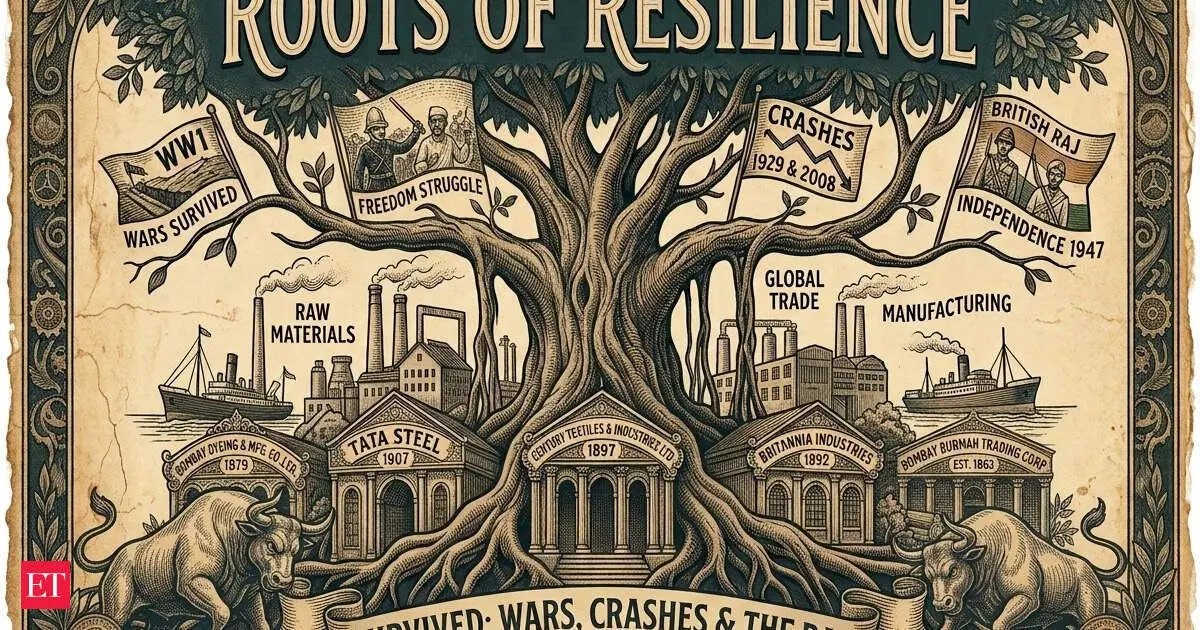
The Economic Times reports that Bombay Burmah Trading Corporation, founded in 1863, is the oldest listed company still available to Indian investors. The firm began as a plantation and trading enterprise in…
The Story in Brief
The Economic Times reports that Bombay Burmah Trading Corporation, founded in 1863, is the oldest listed company still available to Indian investors. The firm began as a plantation and trading enterprise in British Burma and now holds a controlling stake in Britannia Industries. Balmer Lawrie traces its roots to 1867, starting in tea trading before reinventing itself as a Miniratna public sector enterprise under the petroleum ministry.
Bombay Dyeing, incorporated in 1879, grew from a textile mill into a real estate developer after its Mumbai factory lands gained value. ITC began in 1910 as the Imperial Tobacco Company of India and has since transformed into a diversified FMCG giant with brands like Aashirvaad and Sunfeast. All four companies adapted to survive decolonisation, liberalisation and shifting economies, though their longevity does not guarantee future returns.
The Indian Opinion
Stories of companies that outlived the Raj are often told as triumphal tales of resilience. But survival alone is not a strategy. Bombay Burmah's value today depends almost entirely on its Britannia stake, not its 1863 origins. Bombay Dyeing's land holdings are a legacy of past industry, not innovation. The real test is not how long a company has lasted, but whether it can create wealth for shareholders in the next decade. Watch whether ITC's diversification into FMCG can keep margins rising against nimble rivals.
Source: economictimes.indiatimes.com
This story was synthesised by AI from the source linked above.