






















Now Reading: Real estate under-construction value jumps five-fold to $503 bn
-
01
Real estate under-construction value jumps five-fold to $503 bn

Real estate under-construction value jumps five-fold to $503 bn

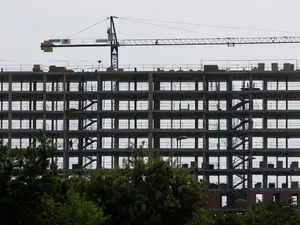
The total value of real estate under construction in India rose more than five-fold to $503 billion in 2025 from $94 billion in 2009, according to a joint report by CREDAI and ANAROCK Research & Advisory released at the NATCON conference in Kolkata on 2 October. The report, titled Indian Real Estate: Growth Trajectory, Sectoral Outlook and Geopolitical Crosscurrents, estimates the overall real estate market has grown from $120 billion in 2017 to about $600 billion in 2025, and is projected to reach $1 trillion by 2030 and $5.8 trillion by 2047.
Residential projects accounted for 85% of the construction pipeline in 2025, up from 48% in 2009, Fortune India and the Economic Times report. The Economic Times puts the housing construction pipeline at $430 billion in 2025, nearly double the $235 billion in 2019. Residential sales across top seven cities rose from Rs 2.35 lakh crore in FY22 to Rs 6.10 lakh crore in FY26, and quarterly sales have stayed above Rs 1.3 lakh crore for seven straight quarters. Global capability centres drove about 45% of office leasing in the first half of 2026. CREDAI is hosting NATCON in Kolkata from 2 to 4 October, with over 1,000 delegates attending.
Indian Opinion Analysis
Both outlets report the same CREDAI-Anarock data and quotes from CREDAI President Shekhar Patel, making this uniform coverage. Fortune India leads with the $503 billion under-construction figure and Patel's GDP contribution estimate of 13% by 2030, framing the story as a growth narrative with urbanisation and formalisation as drivers. The Economic Times leads with the $430 billion housing pipeline figure, emphasising the near-doubling since 2019 and residential's 85% share, then provides Anarock Chairman Anuj Puri's comment on resilience despite the West Asia crisis. The two headlines reflect different entry points, GDP impact versus construction pipeline scale, but neither outlet adopts a critical stance. The report's own projections for 2030 and 2047 are the most concrete forward-looking numbers available.
Coverage: 2 sources, 2 neutral
Sources (2): fortuneindia.com (neutral report), economictimes.indiatimes.com (neutral report)
This brief was synthesised by AI from the 2 sources linked above, so one read covers every framing they carry. Methodology and corrections.