






















Now Reading: RTI at 21: SC refers DPDP amendment challenge to Constitution Bench
-
01
RTI at 21: SC refers DPDP amendment challenge to Constitution Bench


The Story in Brief
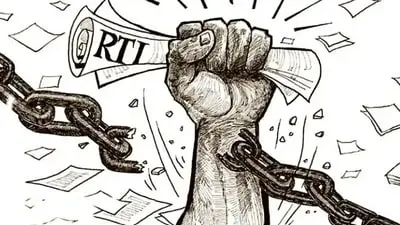
The Supreme Court on Monday, 12 October 2026, referred a series of petitions challenging the amendment to Section 8(1)(j) of the Right to Information Act by the Digital Personal Data Protection Act, 2023, to a Constitution Bench, recognising its 'constitutional sensitivity', The Hindu reports. The amendment replaced the original clause with a six-word exemption covering personal information and removed the public-interest override. LiveLaw notes that the change creates an asymmetric incentive for public information officers: wrongful denial risks a modest penalty but improper disclosure risks a fine of up to ₹250 crore under the DPDP Act.
The RTI Act completed 21 years on Tuesday, 13 October 2026. The Hindu reports that of 2,303 registered public authorities, only 62.7% submitted mandatory third-party transparency audits for 2024-25, and 26 of 94 government department websites had no mandated suo motu disclosures. Activist Nikhil Dey told Hindustan Times that the 2019 amendments made information commissions subservient to the executive and that digitisation has placed key records behind administrative logins. Dey called for time-bound appointments to information commissions, noting Rajasthan has no Chief Information Commissioner. The Supreme Court Constitution Bench is expected to hear the petitions next.
Update, 15 October 2026: The Hindu reports that the Supreme Court on Monday, 12 October 2026, referred the challenge to the Section 8(1)(j) amendment to a Constitution Bench, with the Chief Justice remarking the Court may have to define 'personal information'. LiveLaw adds that former Central Information Commissioner Shailesh Gandhi argues the amendment creates an incentive for officers to deny rather than disclose.
Indian Opinion Analysis
The Hindu’s data-driven audit of Section 4 compliance and its editorial on the DPDP Act amendment both frame the RTI’s 21st anniversary as a moment of institutional erosion. Hindustan Times, through activist Nikhil Dey’s interview, foregrounds grassroots resilience and the citizen movement, while also naming specific legislative damage. LiveLaw’s legal analysis catalogues procedural evasion and the chilling effect on officers, arguing that the 2023 amendment creates a ‘duty to deny’ incentive. Together, the sources agree on the core threat: the DPDP Act’s revision of Section 8(1)(j) weakens transparency. Where they differ is emphasis: The Hindu and LiveLaw stress state failure and legal risk, while Hindustan Times balances that with the activism still sustaining the law. The uniform coverage on the 2019 amendments and CIC vacancies confirms a shared diagnosis. The next concrete development is the Supreme Court Constitution Bench hearing the petitions on the Section 8(1)(j) amendment, referred on 12 October 2026.
Coverage: 4 sources, 3 government-critical, 1 neutral
Sources (4): hindustantimes.com (neutral report), thehindu.com (government critical), thehindu.com (2) (government critical), livelaw.in (government critical)
This brief was synthesised by AI from the 4 sources linked above, so one read covers every framing they carry. Methodology and corrections.