













Now Reading: Rwenzori wildfire first in 12,000 years, study finds
-
01
Rwenzori wildfire first in 12,000 years, study finds



A study published in *Nature* has found that a 2012 wildfire in the Rwenzori Mountains, burning 42 square kilometres of alpine moorland, was the first such blaze in at least 12,000 years.…
The Story in Brief
A study published in *Nature* has found that a 2012 wildfire in the Rwenzori Mountains, burning 42 square kilometres of alpine moorland, was the first such blaze in at least 12,000 years. Researchers analysed sediment cores from two lakes and discovered a charcoal spike more than 100 times greater than any recorded in the previous 12 millennia.
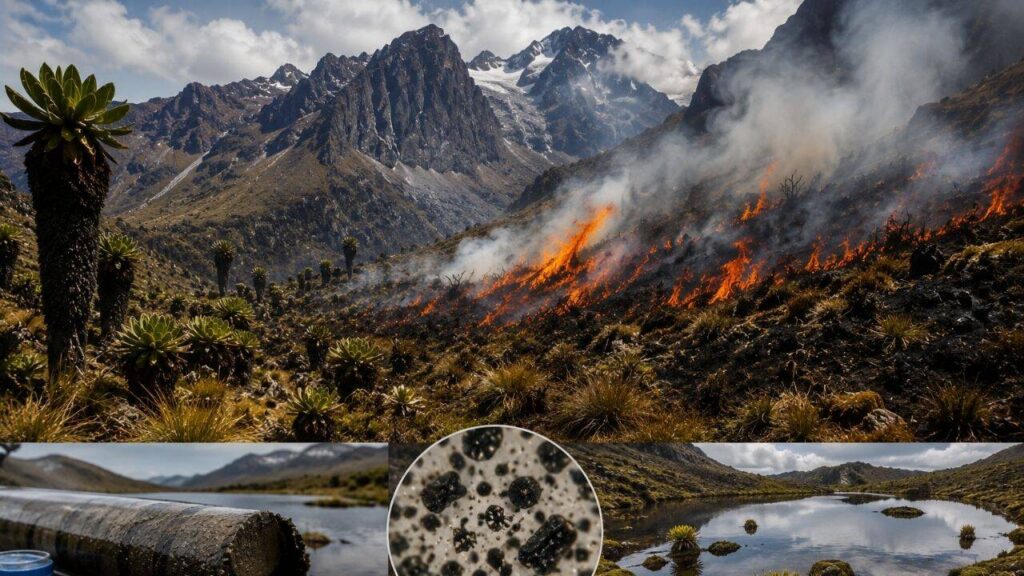
The higher-altitude Lake Kopello core showed virtually no fire evidence for 12,000 years until 2012. In contrast, the lower Lake Mahoma core revealed regular charcoal deposits starting 2,000 years ago, coinciding with human activity. Scientists say climate change and human influence are exposing Africa's unique 'sky island' ecosystems to a new threat. The Rwenzori alpine vegetation evolved without fire, making it particularly vulnerable to blazes that now also strike Mount Kenya and Kilimanjaro.
The Indian Opinion
Headlines about a '100-fold' charcoal spike tempt a narrative of inevitable climate catastrophe, but the data shows a more complex story. The lower slopes burned regularly from human activity 2,000 years ago; the alpine zone's immunity was the real outlier. The question is not whether fire will come, but whether Uganda and DRC can stop human-set ignitions from spreading uphill. A test will be next decade's sediment layers in Lake Kopello after any new fire season.
Source: timesofindia.indiatimes.com
This story was synthesised by AI from the source linked above.
Updated: this story now draws on 1 sources.