



















Now Reading: Climate change altering forest seasons in Nilgiri Biosphere Reserve
-
01
Climate change altering forest seasons in Nilgiri Biosphere Reserve

Climate change altering forest seasons in Nilgiri Biosphere Reserve

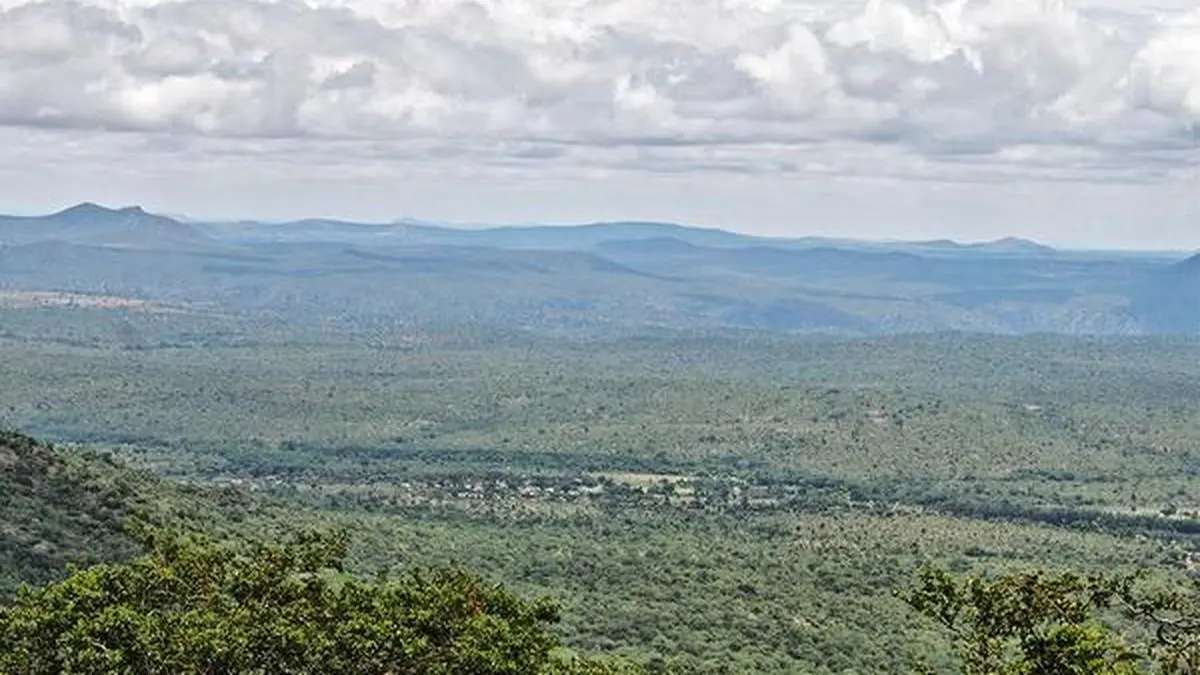
A study published in the journal 'Remote Sensing' has found that climate change is disrupting the seasonal rhythm of forests in the Nilgiri Biosphere Reserve (NBR). Researchers used satellite imagery to analyse four forest types over two decades (2000-2020) and recorded an annual temperature increase of 0.01 degrees Celsius and a rainfall decrease of 3.97 mm per year between 1950 and 2018.
The study found that the start of the growing season delayed from 2001 to 2010, shortening seasons for dry deciduous, semi-evergreen and wet evergreen forests, but lengthening it for moist deciduous forests. From 2011 to 2020, the pattern reversed: the season started earlier and lasted longer across all forest types.
Restoration ecologist Godwin Vasanth Bosco said cloud forest sections of the Sholas show visible drying and loss of moisture-dependent plants like mosses and orchids. He warned that once a Shola cannot retain its own humidity, it can no longer support its unique ecosystem. Researchers expect seasonal variability to increase with extreme weather.
Indian Opinion Analysis
The Nilgiri Biosphere Reserve is part of the Western Ghats, a UNESCO World Heritage Site and one of eight 'hottest' biodiversity hotspots globally. The Shola forests are ancient, climate-buffering ecosystems that act as natural water towers for the region's rivers and tea plantations. If their internal microclimate collapses, the impact will cascade downstream: reduced dry-season flows, stressed hydropower and irrigation systems across Tamil Nadu and Karnataka. The study's key finding is not just that forests are changing, but that the timing of biological events is decoupling from the cues plants rely on. This phenological shift can disrupt pollination, fruiting, and animal migration patterns that have evolved over millennia. The next critical signal to watch is whether the 2024-25 season confirms the trend of earlier greening, or if extreme events like the current rain deficit trigger a new phase of seasonal collapse.
The study's key finding is not just that forests are changing, but that the timing of biological events is decoupling from the cues plants rely on. This phenological shift can disrupt pollination, fruiting, and animal migration patterns that have evolved over millennia. The next critical signal to watch is whether the 2024-25 season confirms the trend of earlier greening, or if extreme events like the current rain deficit trigger a new phase of seasonal collapse.
Source: thehindu.com
This story was synthesised by AI from the source linked above. Methodology and corrections.