



















Now Reading: Squint eye affects 1.81% of global population, study finds
-
01
Squint eye affects 1.81% of global population, study finds


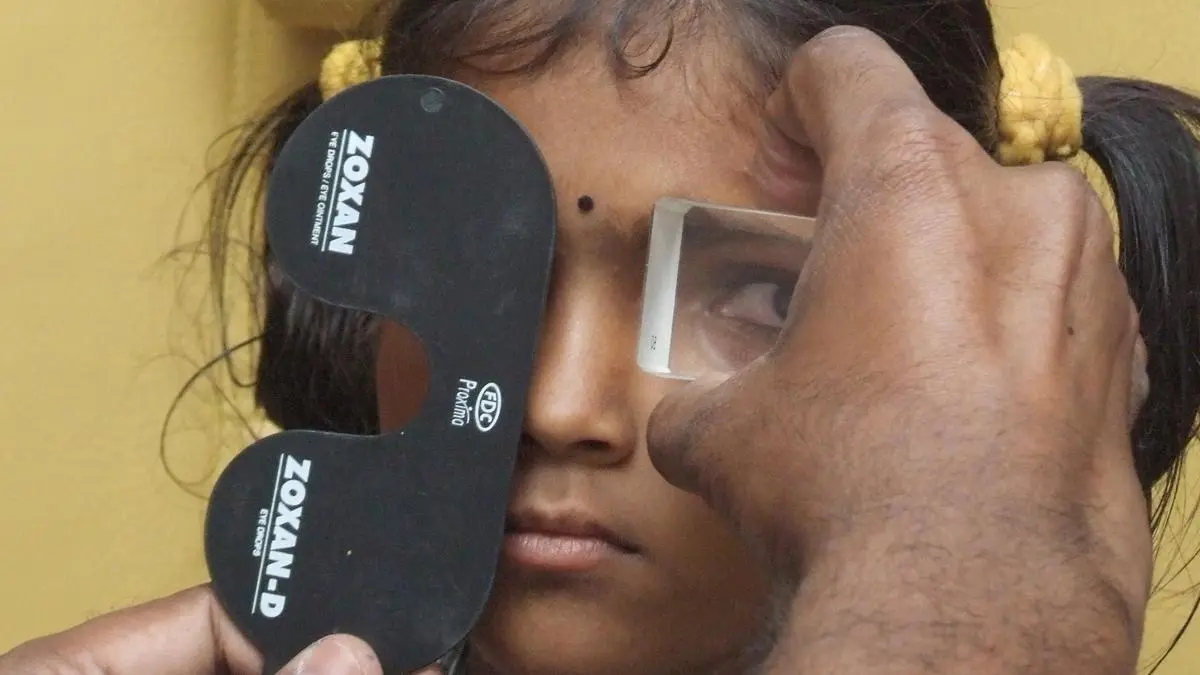
A recent study estimates that horizontal strabismus, commonly known as squint eye, affects 1.81% of the global population, or about 138.5 million people. Exotropia, where the eye turns outward, affects an estimated 1.14% (87.5 million people), while esotropia, where the eye turns inward, affects 0.67% (60 million). The pattern has shifted across generations, with exotropia now more common worldwide.

The World Health Organization recognises strabismus as a condition requiring long-term monitoring and treatment, noting it is a cause of amblyopia or reduced vision from abnormal visual development. Treatment options include glasses, eye exercises, and surgery to adjust eye muscles, with early intervention reducing the impact on vision.
Indian Opinion Analysis
Squint is often detected in childhood but can develop in adults due to diabetes, stroke, or thyroid eye disease. Early screening is critical because the brain may suppress the image from the misaligned eye, leading to permanent vision loss if untreated. The study's finding that parts of South Asia remain under-represented in research means prevalence estimates for India may be incomplete. Parents should watch for children tilting their head or closing one eye in bright light. A sudden squint in an adult requires prompt medical evaluation.
Source: thehindu.com
This story was synthesised by AI from the source linked above. Methodology and corrections.