














Now Reading: Supreme Court extends cruelty law to live-in relationships akin to marriage
-
01
Supreme Court extends cruelty law to live-in relationships akin to marriage

Supreme Court extends cruelty law to live-in relationships akin to marriage


The Supreme Court has ruled that women in live-in relationships 'in the nature of marriage' can seek protection from cruelty under Section 498-A of the Indian Penal Code, corresponding to Sections 85…
The Story in Brief
The Supreme Court has ruled that women in live-in relationships 'in the nature of marriage' can seek protection from cruelty under Section 498-A of the Indian Penal Code, corresponding to Sections 85 and 86 of the Bharatiya Nyaya Sanhita, 2023. The August 3 judgment in Lokesh BH versus State of Karnataka (2026) held that denying protection merely because a couple did not formally marry would violate Article 14 (Right to Equality). However, protection extends only if the partners had a clear intention to marry.
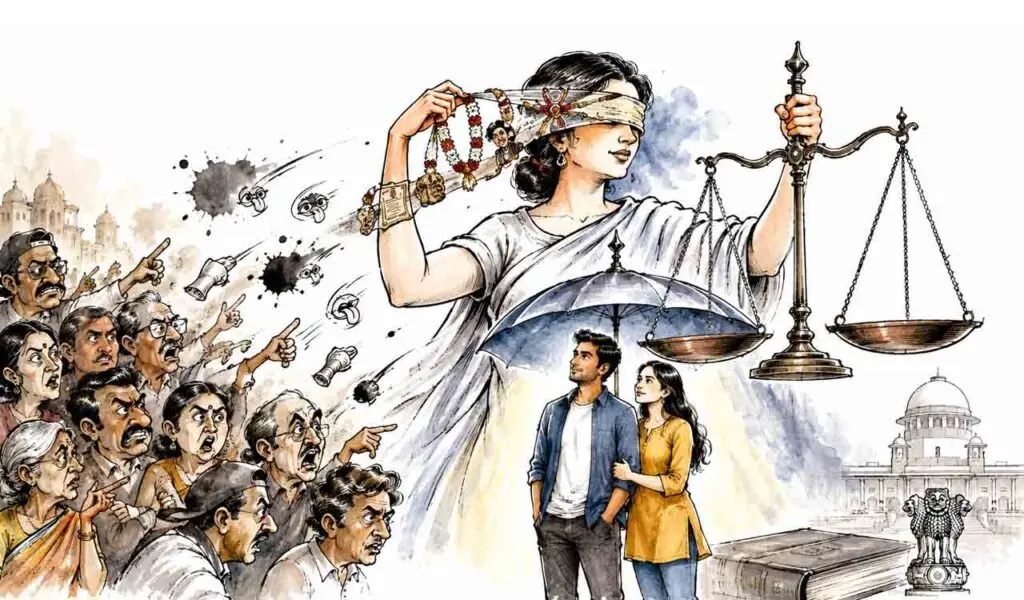
The court invoked the KV Puttaswamy judgment on privacy to argue that lack of legal recognition for live-in relationships should not deny protection. Both criminal law under Section 498-A and the Protection of Women from Domestic Violence Act, 2005 now apply to such relationships. Telangana Today notes this brings criminal law in step with evolving social realities, while India Today reports the ruling also requires proving intention to marry, a subjective element that could limit its application.
The Indian Opinion
Media cheer for this judgment is deafening, but the real test is whether Indian society accepts the court's logic of intent-to-marry. The ruling demands proof of intention to marry for Section 498-A protection, a subjective standard that invites litigation over what counts as 'future intent'. Abusive partners can still claim the relationship was casual, not marriage-like. Watch for the first few cases where women allege cruelty but lack a written promise of marriage. Will the courts apply the same purposive interpretation then, or retreat into formalism?
Sources (2): telanganatoday.com, indiatoday.in
This story was synthesised by AI from the 2 sources linked above.
Updated: this story now draws on 2 sources.