








Now Reading: Supreme Court questions democracy in Shiv Sena constitution
-
01
Supreme Court questions democracy in Shiv Sena constitution


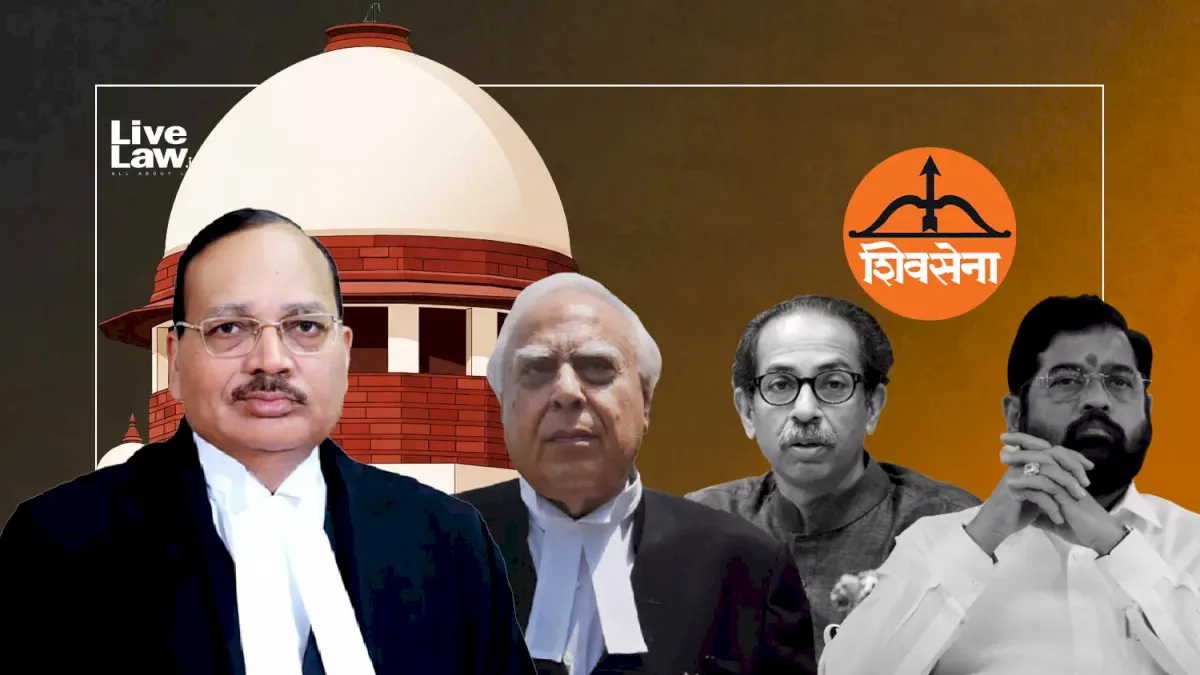
The Supreme Court on Thursday questioned whether political parties must follow democratic principles like constitutional institutions during the hearing of the Shiv Sena dispute. The bench said the party’s amended constitution appeared…
The Story in Brief
The Supreme Court on Thursday questioned whether political parties must follow democratic principles like constitutional institutions during the hearing of the Shiv Sena dispute. The bench said the party’s amended constitution appeared to have created a one-person structure, according to Rediff.com. Senior advocate Kapil Sibal, representing the Uddhav Thackeray faction, argued that the Election Commission exceeded its authority by rejecting the 2018 constitution and favouring legislative strength over organisational support.

The case concerns the ECI’s recognition of the Eknath Shinde faction as the official Shiv Sena and its allotment of the bow and arrow symbol. It also involves a challenge to the Maharashtra Speaker’s refusal to disqualify Shinde-faction MLAs. The bench noted that the Speaker and ECI applied different tests to overlapping facts.
The Indian Opinion
The easy narratives are that defection is either a badge of honour or that every party constitution deserves automatic judicial protection. Neither settles the institutional problem. Parties need internal democracy, but the ECI’s legal power to assess party constitutions also needs clear limits. The useful test is whether the final ruling explains how Section 29A applies to amended constitutions and why organisational support was weighed against legislative strength.
Sources (2): livelaw.in, rediff.com
This story was synthesised by AI from the 2 sources linked above.
Updated: this story now draws on 2 sources.