Now Reading: Supreme Court upholds acquittal of 20 in murder case over identical witness accounts
-
01
Supreme Court upholds acquittal of 20 in murder case over identical witness accounts

Supreme Court upholds acquittal of 20 in murder case over identical witness accounts

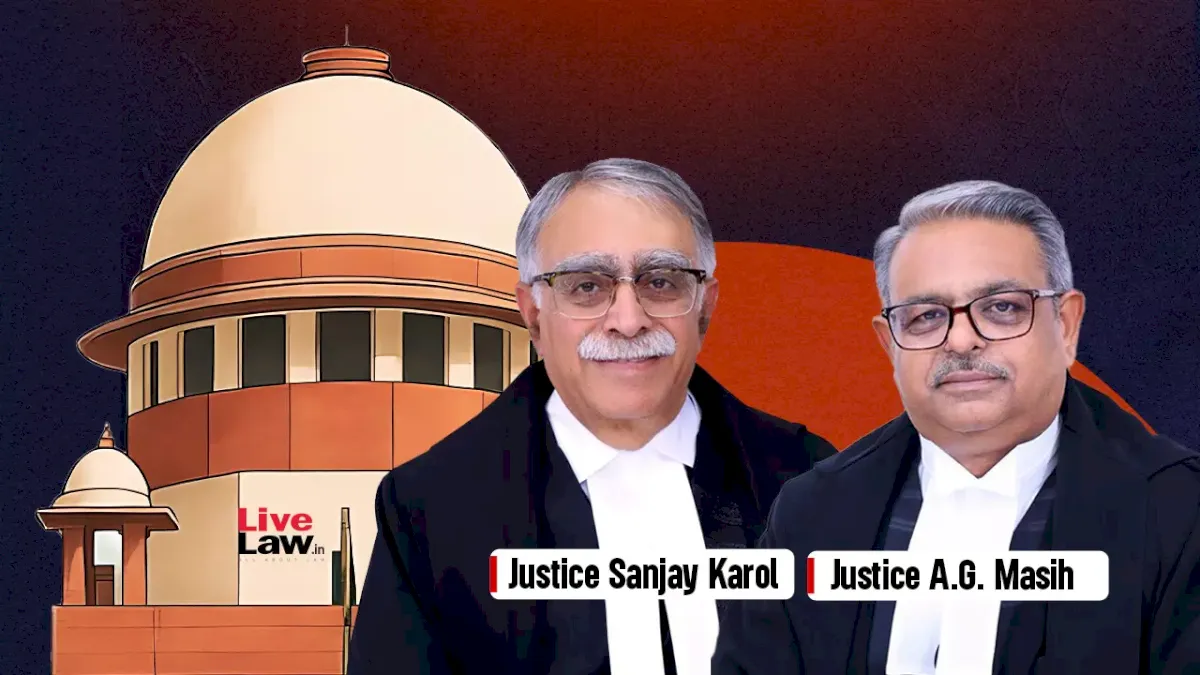
The Supreme Court has upheld the Bombay High Court's order acquitting 20 people convicted of murder, ruling that the trial court relied on eyewitness accounts that were improbably identical. Justice Sanjay Karol…
The Story in Brief
The Supreme Court has upheld the Bombay High Court's order acquitting 20 people convicted of murder, ruling that the trial court relied on eyewitness accounts that were improbably identical. Justice Sanjay Karol and Justice Augustine George Masih noted that witnesses described the roles of all 23 accused with minute uniformity, despite being differently positioned during the incident. The court said such identical testimonies, recorded days after the event, "bear the imprint of tutoring" rather than truthful recollection.

The case arose from a 2014 altercation over DJ music, in which one man died from assault with iron pipes and planks. The trial court convicted 20 of 23 accused; one died during trial and two were acquitted. The High Court reversed the convictions, finding the witnesses had spoken in almost identical fashion. The Supreme Court dismissed the state's appeal, also noting that even an injured witness's account cannot reliably list the precise role of each of 23 persons identically days later.
The Indian Opinion
The Supreme Court's ruling that identical eyewitness accounts can indicate tutoring rather than truth is sensible, but it also exposes a deeper worry: that investigators and trial courts too often rely on manufactured evidence to secure convictions. The trial court here convicted 20 people based on scripts, not memories. The High Court and the Supreme Court rightly saw through it. The real test now is whether police and prosecution will change how they record statements, or continue to polish uniform stories that collapse on appeal. Why was the case built so weakly in the first place?
Source: livelaw.in
This story was synthesised by AI from the source linked above.