











Now Reading: Government to levy 0.4% MDR on UPI merchant payments above Rs 2,000
-
01
Government to levy 0.4% MDR on UPI merchant payments above Rs 2,000


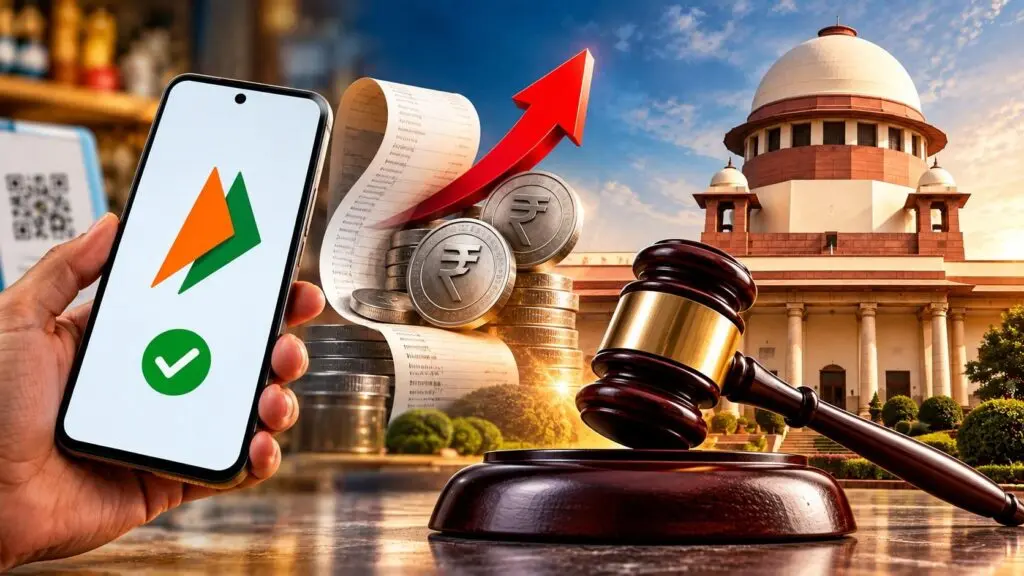
The government has introduced a 0.4% Merchant Discount Rate (MDR) on UPI merchant payments above Rs 2,000, effective October 15, 2026. The National Payments Corporation of India (NPCI) says customer-to-customer transfers and…
The government has introduced a 0.4% Merchant Discount Rate (MDR) on UPI merchant payments above Rs 2,000, effective October 15, 2026. The National Payments Corporation of India (NPCI) says customer-to-customer transfers and payments up to Rs 2,000 remain free, covering 96% of transactions. A flat Rs 5 fee applies to fuel, railway, insurance, and utility payments over Rs 2,000, while capital market transactions attract 0.02% MDR capped at Rs 300.
Industry leaders are divided. PhonePe CEO Sameer Nigam and MobiKwik co-founder Upasana Taku welcomed the charge as necessary for ecosystem sustainability. Former BharatPe CEO Ashneer Grover called it a tax that will ultimately be passed to consumers, arguing banks and RBI have ample surplus to subsidise UPI. Zerodha co-founder Nithin Kamath flagged that the Rs 300 cap could cost brokers millions on non-trading transfers. Fintech stocks including Paytm initially rallied on the news.
Indian Opinion Analysis
The new UPI MDR draws sharply different readings from the industry. Pro-government sources such as the Finance Ministry's release and Times Now lead with the claim that 96% of merchant transactions are exempt and that customers are protected from the charge. Critical coverage led by National Herald and featuring Ashneer Grover counters that the levy is a tax passed to consumers, citing bank and RBI surpluses to argue the subsidy was affordable. The balanced reading is structural: the government frames MDR as sustainability, critics as a gift to US-owned apps PhonePe and Google Pay. The real test is whether merchants absorb the 0.4% cost or pass it on, which consumer inflation data this quarter will reveal.
Coverage: 12 sources, 1 pro-government, 3 government-critical, 8 neutral
Sources (12): hindustantimes.com (neutral report), hindustantimes.com (2) (government critical), hindustantimes.com (3) (neutral report), timesofindia.indiatimes.com (neutral report), thehindu.com (neutral report), nationalheraldindia.com (government critical), timesnownews.com (government critical), timesnownews.com (2) (pro government), livemint.com (neutral report), livemint.com (2) (neutral report), rediff.com (neutral report), rediff.com (2) (neutral report)
This brief was synthesised by AI from the 12 sources linked above, so one read covers every framing they carry.
Updated: this story now draws on 12 sources.