



Now Reading: Women carry the real burden of religious rituals for brands
-
01
Women carry the real burden of religious rituals for brands


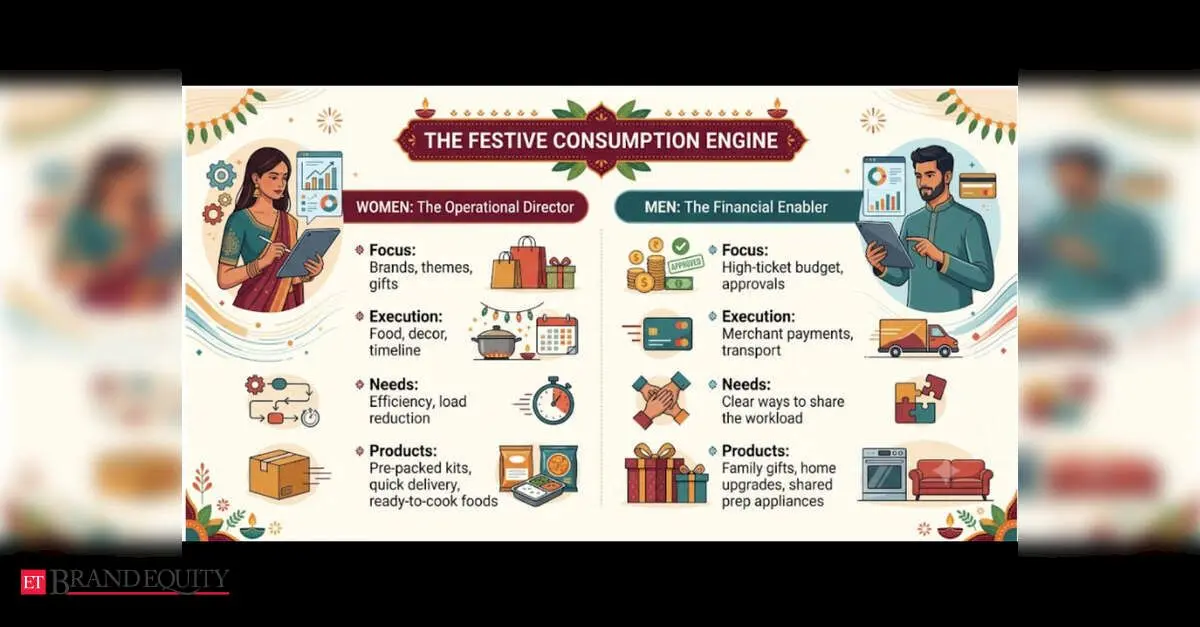
A new analysis argues that in India, women manage the bulk of domestic religious rituals, tracking lunar calendars, sourcing ingredients, and organising fasts, while men occupy formal public roles. This division, sociologists…
The Story in Brief
A new analysis argues that in India, women manage the bulk of domestic religious rituals, tracking lunar calendars, sourcing ingredients, and organising fasts, while men occupy formal public roles. This division, sociologists say, is a cultural structure, not a scriptural rule, built over centuries by split public and domestic spheres.
The piece gives women agency as 'shadow power': matriarchs built social networks and authority through ritual mastery. It points out that brands miss this female COO role during festivals, which drive huge retail spending on jewellery, clothing, and home upgrades. The story draws parallels with Confucian East Asia, folk Catholicism, and traditional Judaism, where similar gendered divides operate behind the scenes.

The Indian Opinion
The narrative that women's ritual labour is choice or devotion needs a hard check. By framing domestic rituals as 'shadow power', the piece risks romanticising an unequal load that has no male equivalent. If this cultural structure is as automatic as claimed, why do brands still target a generic 'household' when the female COO is the real decision-maker? The test will be whether this festive season's ads explicitly show men sourcing ingredients or managing the calendar, not just holding the havan.
Source: brandequity.economictimes.indiatimes.com
This story was synthesised by AI from the source linked above.