















Now Reading: 70 million years ago, Earth had 372 days a year
-
01
70 million years ago, Earth had 372 days a year



Seventy million years ago, the Earth spun faster, making a year last 372 days and each day about 23 hours and 31 minutes, according to a study of a fossilised shell from…
The Story in Brief
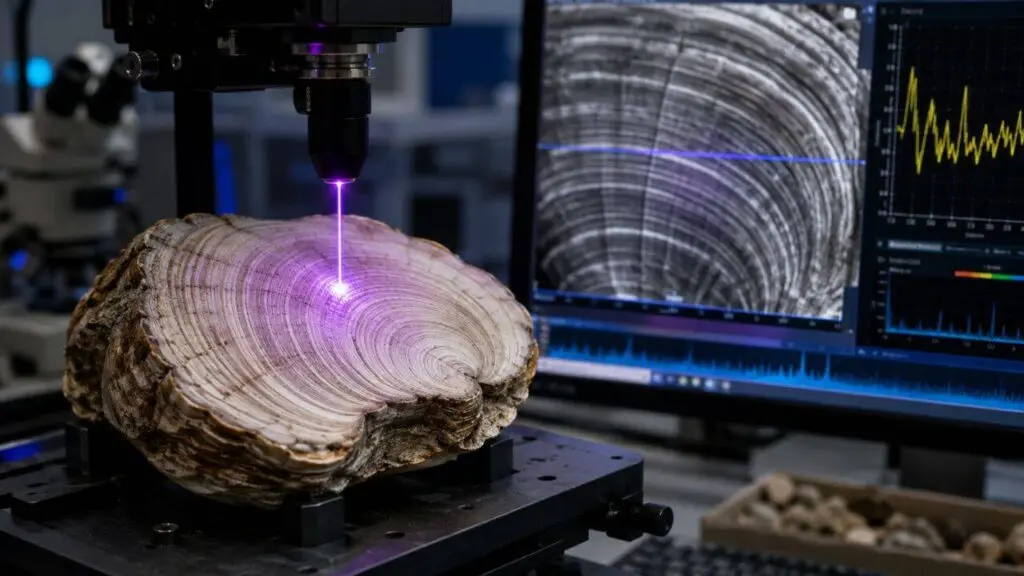
Seventy million years ago, the Earth spun faster, making a year last 372 days and each day about 23 hours and 31 minutes, according to a study of a fossilised shell from Oman. Researchers used laser sampling on a rudist bivalve, Torreites sanchezi, from the Al-Hajar Mountains, to count daily growth rings with precision. Their work, published in Advancing Earth and Space Sciences, shows the mollusc lived over nine years on a tropical seabed. The analysis also revealed ocean temperatures were several degrees warmer than today, and the shell preserved evidence of a light-dependent relationship with photosynthetic symbionts, similar to giant clams.
The Indian Opinion
The usual hype around 'ancient mysteries' risks obscuring the real science here. The study's meaningful contribution is not that days were shorter, models already predicted that, but that laser ablation can read daily cycles in fossils, and that this shell offers the first convincing sign of photosymbiosis in Torreites. The earth-moon distance calculation is a useful check on known models, not a surprise. A telling detail to watch is whether similar techniques on other rudist species confirm the symbiosis claim or show it was unique to this genus.
Source: timesofindia.indiatimes.com
This story was synthesised by AI from the source linked above.