













Now Reading: South Australia cave bones record effects of light and darkness
-
01
South Australia cave bones record effects of light and darkness



Scientists from Griffith University have found that animal bones in South Australia’s underwater caves carry distinct marks linked to their surroundings. Bones near cave entrances, where sunlight reaches the water, showed algae,…
The Story in Brief
Scientists from Griffith University have found that animal bones in South Australia’s underwater caves carry distinct marks linked to their surroundings. Bones near cave entrances, where sunlight reaches the water, showed algae, aquatic plants and biofilms, along with black staining, corrosion and circular etching. Remains from permanently dark zones were far better preserved and lacked these biological marks.
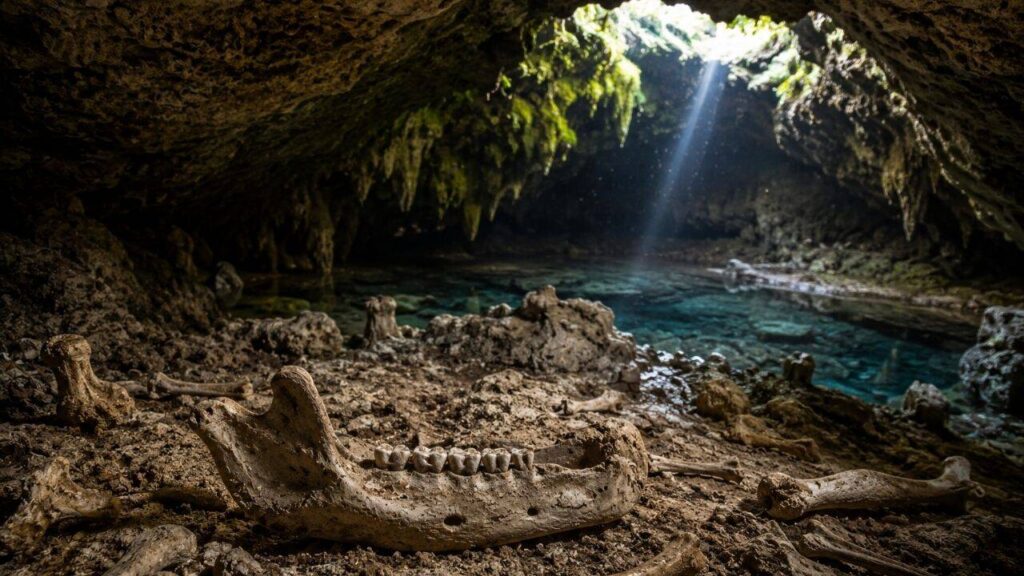
Published in PLOS One, the study examined bones from Green Waterhole and Gouldens Sinkhole near Mount Gambier. Radiocarbon dating of 41 specimens placed them across decades and centuries. The findings may help archaeologists determine how ancient bones entered underwater caves and changed after deposition, including remains of extinct Australian megafauna.
The Indian Opinion
Claims that underwater caves simply preserve bones untouched would be as misleading as saying light destroys every specimen. The study shows a more useful distinction: darkness limits algae and related organisms, while illuminated areas leave biological and chemical signatures. Nor should recent bones from kangaroos, livestock and other animals be treated as direct substitutes for ancient megafauna. The real test will be whether these signatures can reliably date when older fossils entered flooded cave systems.
Source: timesofindia.indiatimes.com
This story was synthesised by AI from the source linked above.