














Now Reading: 79 years of work: How India’s job market transformed from security to skills
-
01
79 years of work: How India’s job market transformed from security to skills

79 years of work: How India’s job market transformed from security to skills

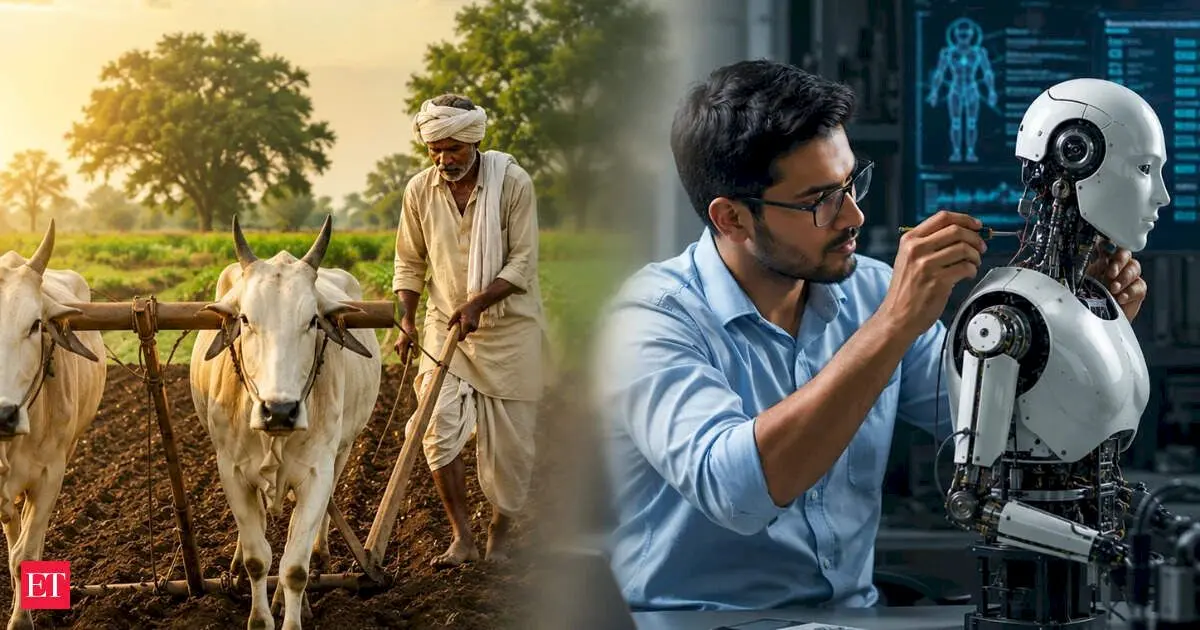
A new analysis of India's 79-year job history reveals five distinct phases, from government-and-agriculture security (1947-1990s) to the liberalisation-era IT boom and today's AI-disrupted gig economy. Anurag Malik of EY India notes…
The Story in Brief
A new analysis of India's 79-year job history reveals five distinct phases, from government-and-agriculture security (1947-1990s) to the liberalisation-era IT boom and today's AI-disrupted gig economy. Anurag Malik of EY India notes that in 1983, 70% of workers depended on inherited farmland; by 2005, trade had surged from 15% to 34% of GDP. But the gains are uneven: 88% of workers remain in low-competency jobs, and 29% of young graduates are unemployed, per ILO data. Akash Kumar, a former Google and Amazon recruiter, warns that even premium white-collar roles are vanishing to automation, pushing more workers toward freelancing.
The pattern, Malik explains, shifted from lifetime government or farm employment to a market where skills, not tenure, determine earnings. Yet the foundational problem persists: India's workforce lacks the competencies that modern employers demand, a gap that the AI revolution is widening.
The Indian Opinion
The narrative that India's job crisis is new ignores history. For 79 years, from government jobs to IT booms to gig work, employment has always been in flux. Yet politicians and pundits keep peddling simple solutions, reservation quotas, protectionist policies, as if the 1950s will return. The real story is 88% of workers stuck in low-competency roles while 29% of graduates cannot find jobs. Skills mismatch, not job scarcity, is the silent crisis. Until we measure how many workers actually upskill each year, the debate stays hollow.
Source: economictimes.indiatimes.com
This story was synthesised by AI from the source linked above.