












Now Reading: Chinese Long March 7A rocket explodes seconds after launch
-
01
Chinese Long March 7A rocket explodes seconds after launch


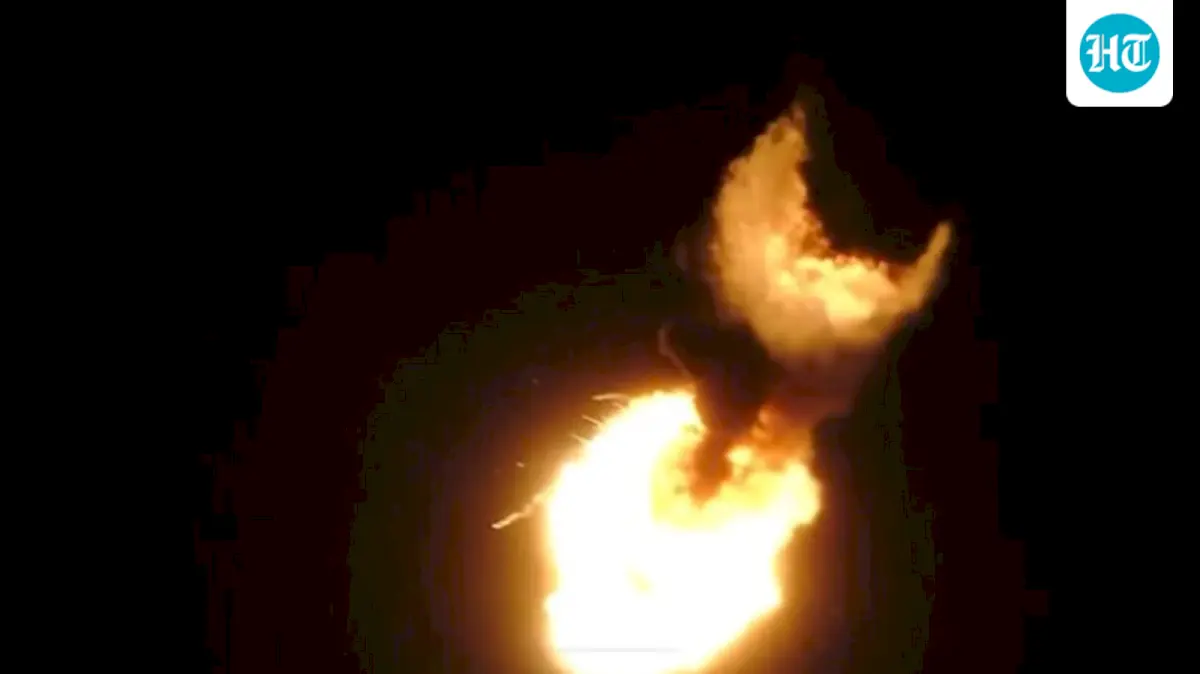
A Chinese Long March 7A rocket carrying the ChinaSat-4B satellite exploded about 85 seconds after liftoff from the Wenchang Space Launch Site on Monday evening. State news agency Xinhua confirmed a flight…
The Story in Brief
A Chinese Long March 7A rocket carrying the ChinaSat-4B satellite exploded about 85 seconds after liftoff from the Wenchang Space Launch Site on Monday evening. State news agency Xinhua confirmed a flight anomaly occurred shortly after the 8:02 pm Beijing time launch and said the cause is being investigated. Eyewitnesses reported a bright flash and glowing fragments in the night sky.
This is the first known failure of the Long March 7A since its maiden flight in March 2020 also ended in failure. The rocket returned to service in 2021 and subsequently completed several successful launches, including the Tianlian-3 (01) satellite mission in July. China's space authorities have not yet issued an official statement on the mission's outcome.
The Indian Opinion
Two familiar narratives are competing online: one paints China's space programme as inherently risky and overambitious; the other dismisses the failure as a minor glitch in an otherwise stellar record. Both miss the mark. The Long March 7A had completed several successful missions after its 2020 maiden-flight failure, so one anomaly does not prove systemic weakness. Yet a second failure of the same rocket model demands transparency. The question to watch is whether Chinese authorities release the full investigation report or keep the cause vague, as they did after the 2020 incident.
Sources (2): hindustantimes.com, timesofindia.indiatimes.com
This story was synthesised by AI from the 2 sources linked above.
Updated: this story now draws on 2 sources.