













Now Reading: Danube Drought Exposes Nazi Wrecks and Ice Age Fossils
-
01
Danube Drought Exposes Nazi Wrecks and Ice Age Fossils


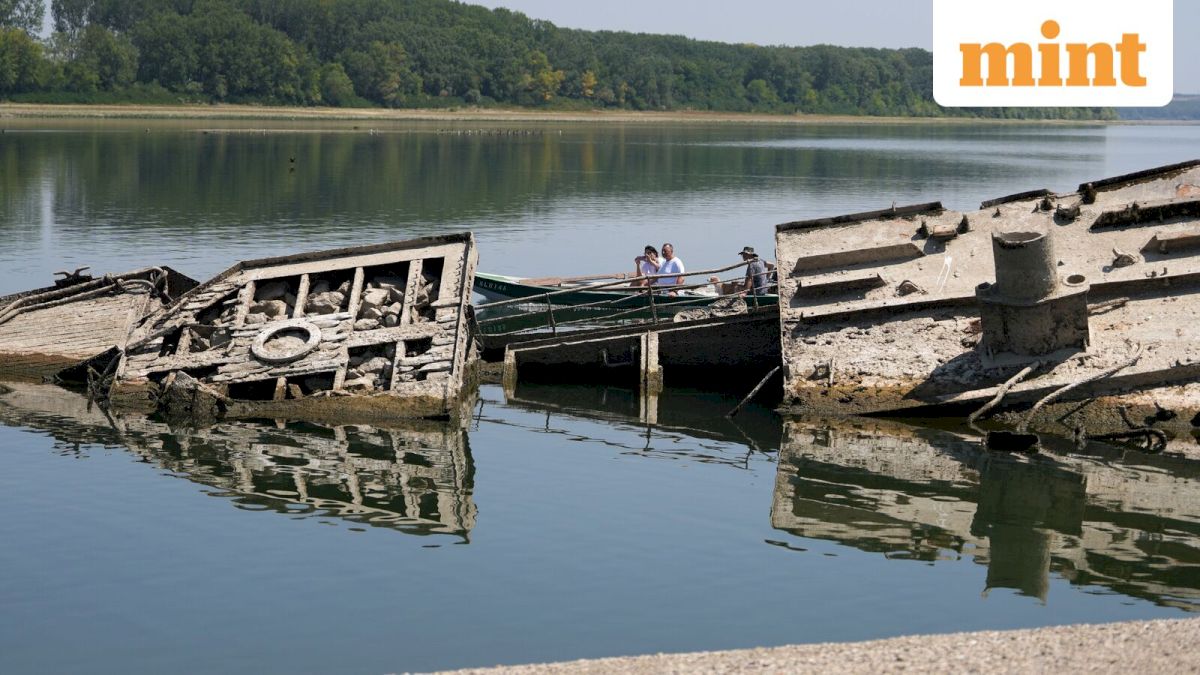
Prolonged drought, heat and scant rainfall have pushed parts of the Danube to record-low levels, exposing at least 20 German military vessels near Prahovo in Serbia. German forces sank the ships in…
The Story in Brief
Prolonged drought, heat and scant rainfall have pushed parts of the Danube to record-low levels, exposing at least 20 German military vessels near Prahovo in Serbia. German forces sank the ships in September 1944 while retreating, and some may still contain unexploded ordnance. The wrecks have disrupted navigation.
In Bulgaria, researchers found mammoth remains including a jawbone, tusk fragments, a shoulder blade and a femur. Hindustan Times also reports that low water has exposed wartime bridge remains and an old barge along the Rhine, where ferry services and river traffic have been affected. In Budapest, levels fell to four inches, below the 2018 low of 13 inches.

The Indian Opinion
The lazy story is that drought has turned Europe’s rivers into open-air museums, while the opposing alarm says every exposed wreck is an immediate disaster. Neither is justified. The ships may contain dangerous material, but that needs assessment, not speculation. Fossils also require proper identification and conservation. The practical test is whether authorities can keep navigation safe as water levels fall, and whether surveys confirm the reported wreck and fossil counts.
Sources (2): livemint.com, hindustantimes.com
This story was synthesised by AI from the 2 sources linked above.
Updated: this story now draws on 2 sources.