

















Now Reading: Delhi air pollution linked to brain damage, DU review says
-
01
Delhi air pollution linked to brain damage, DU review says


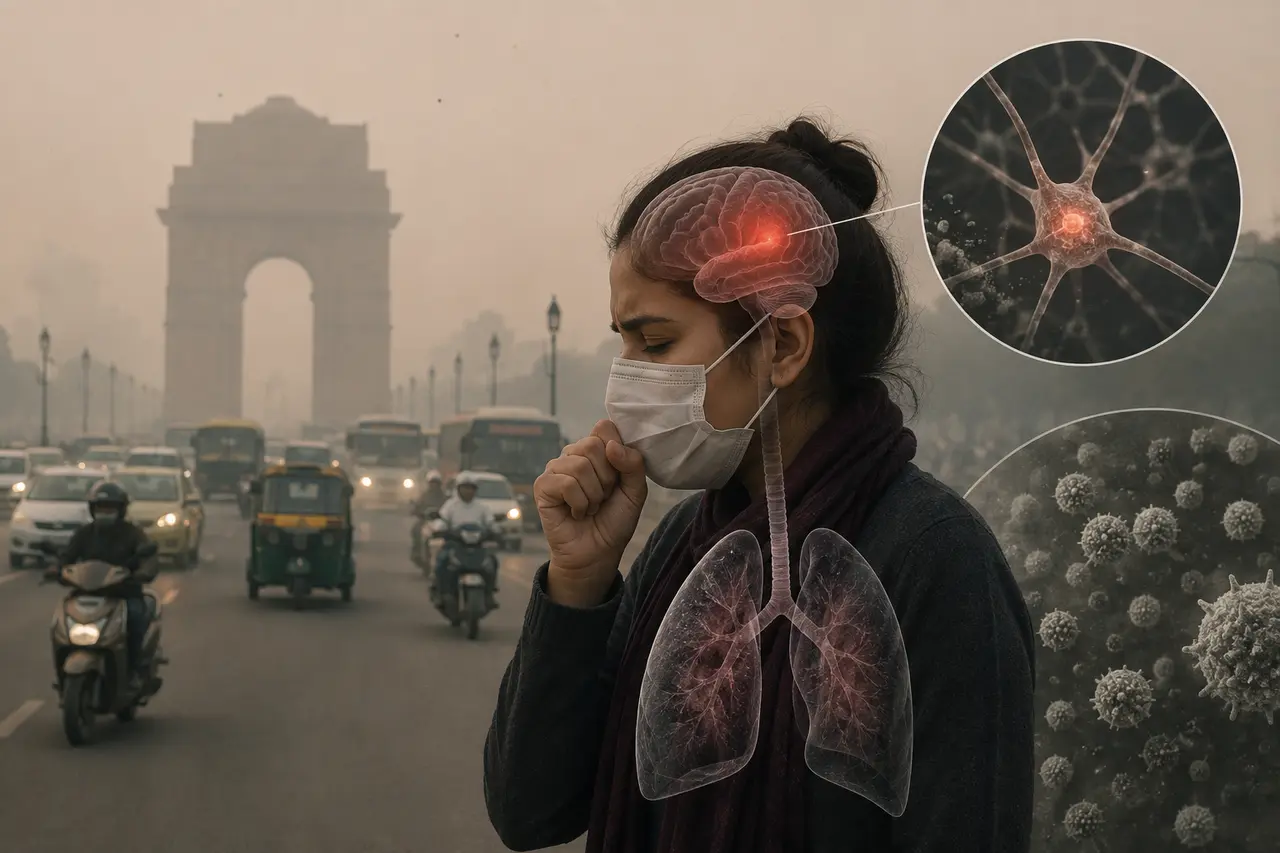
A Delhi University review of 129 studies has found that long-term exposure to fine particulate matter (PM2.5) could harm the brain, not just the lungs and heart. Researchers said the smallest particles can trigger inflammation, cross the blood-brain barrier, and reach the central nervous system via the nose, leading to structural and functional changes.
The review linked pollution with reductions in brain volume and cortical thickness, especially in areas controlling memory, attention, and decision-making. It also cited evidence of impaired hippocampal function and disrupted neural connections. Researchers flagged concerns for children, whose brains are still developing, and young adults, where prolonged exposure may accelerate brain ageing.
Lead researcher Vandana Mishra said air pollution is now a brain-health problem, with evidence connecting it to cognitive decline and processes linked to Alzheimer's and Parkinson's. The authors cautioned the findings do not prove pollution alone causes neurological diseases, but added that for Delhi, where heavy particulate exposure is routine, the health cost is deeper than previously understood.
Indian Opinion Analysis
The review adds to a growing body of evidence that moves the pollution debate beyond immediate respiratory harm. Air quality in Delhi is already linked to reduced life expectancy, and cognitive costs compound that burden. Children are particularly vulnerable because their developing brains may absorb lasting damage. The findings also raise implications for productivity and healthcare costs that are not yet fully quantified. Public health interventions and policy enforcement on vehicle emissions and construction dust remain key variables. The next milestone is the winter inversion layer, which typically worsens PM2.5 levels from October onwards, and the effectiveness of the Graded Response Action Plan at preventing neurological harm.
Source: greaterkashmir.com
This story was synthesised by AI from the source linked above. Methodology and corrections.