




















Now Reading: Bengal oncologists link passive smoking, pollution to aggressive lung cancer
-
01
Bengal oncologists link passive smoking, pollution to aggressive lung cancer

Bengal oncologists link passive smoking, pollution to aggressive lung cancer

The Story in Brief
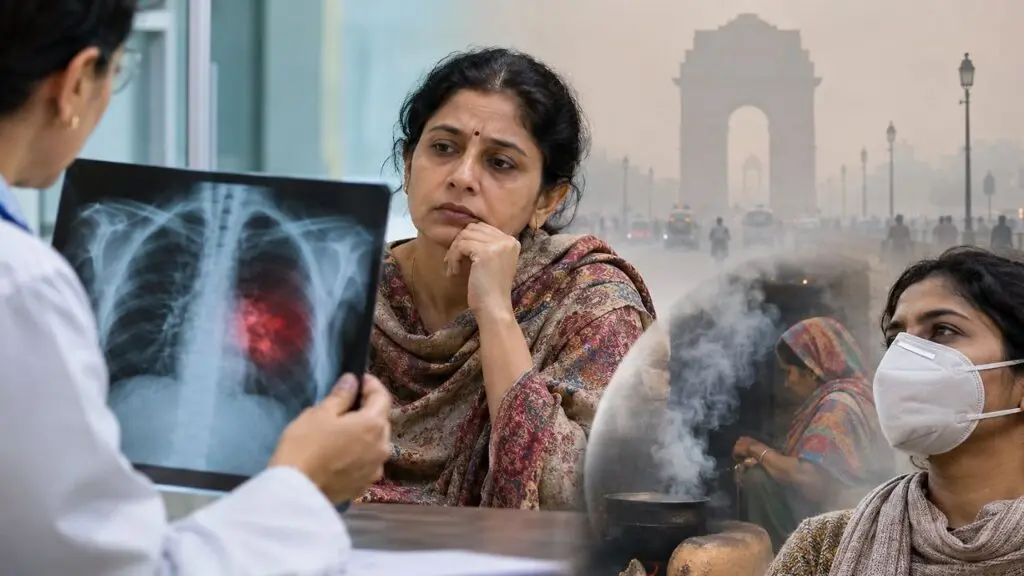
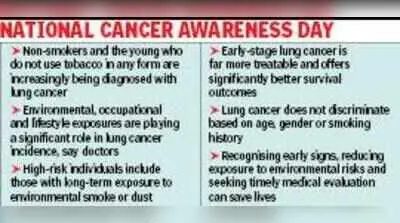
On National Cancer Awareness Day, Saturday, 7 November 2026, oncologists in Bengal said passive smoking and air pollution are driving a rise in aggressive lung cancer, especially among non-smokers. Citing National Family Health Survey data, The Times of India reported that Bengal has one of the highest secondhand smoke exposure rates in India, with 54.2% of women and 68.1% of men routinely exposed. Lung cancer accounts for about 14% of cancer diagnoses in Bengal, against a national average of 6%, and non-smokers now make up 40 to 50% of lung cancer cases in the region, according to the Indian Cancer Society.
The Times of India reported that doctors linked the trend to smoke from firecrackers, chullahs, and ambient pollution, with some observing faster cancerous growth in non-smoking women exposed to passive smoke than in smokers. Separately, on 7 November, Mathrubhumi and ThePrint quoted doctors advising moderation in sweets and caution against Diwali pollution, warning that an AQI of 250 is equivalent to smoking 10-15 cigarettes a day. Deccan Herald on 8 November reported Bengaluru doctors warning that firecracker smoke can trigger delayed respiratory symptoms, with cough and breathlessness persisting for days after exposure.
Update, 8 November 2026: ThePrint now also reports the story, carrying the same PTI wire as Mathrubhumi on Diwali health precautions. It confirms doctors advising moderation in sweets and caution against polluted air, with no new facts beyond what Mathrubhumi had already published.
Indian Opinion Analysis
Coverage is uniform straight reporting across all four outlets, each presenting expert warnings without policy advocacy or partisan framing. The Times of India leads with Bengal-specific cancer data and passive smoke attribution, while Mathrubhumi and ThePrint carry identical PTI copy focused on general Diwali health precautions. Deccan Herald adds a Bengaluru angle on delayed respiratory symptoms. No outlet questions official figures or doctor statements, and none offers a competing view. The common thread is that all frame pollution as a direct health threat during Diwali, with the Bengal story providing the strongest local evidence of lung cancer trends. No next step is named, the reports leave open whether authorities will act on the warnings.
Coverage: 3 sources, 3 neutral
Sources (3): timesofindia.indiatimes.com (neutral report), PTI (carried by mathrubhumi.com, theprint.in), deccanherald.com (neutral report)
This brief was synthesised by AI from the 3 sources linked above, so one read covers every framing they carry. Methodology and corrections.