














Now Reading: Himalayan glacier loss threatens 20% of India’s GDP: study
-
01
Himalayan glacier loss threatens 20% of India’s GDP: study


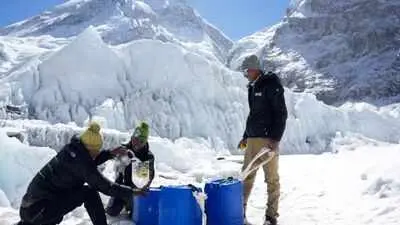
Himalayan glaciers are losing mass 65 percent faster than a decade ago, putting India's water security and economy at serious risk, a new report warns. The study, titled Prosperous and Resilient Himalayas,…
Himalayan glaciers are losing mass 65 percent faster than a decade ago, putting India's water security and economy at serious risk, a new report warns. The study, titled Prosperous and Resilient Himalayas, was led by Systemiq in partnership with the Integrated Mountain Initiative, ICIMOD and the G.B. Pant National Institute of Himalayan Environment, and was supported by the Rockefeller Foundation.
The report says close to 200 glacial lakes in India have been rated high risk, with 56 classified as very high risk. It estimates that Himalayan water systems underpin more than 20 percent of India's GDP. The region is approaching 'peak water,' after which glacier-fed river flows will decline. The report also highlights that only 21 of an estimated 40,000 glaciers in the Hindu Kush Himalaya are monitored on the ground.
The warning follows the August 26 glacier collapse on the Nepal-Tibet border that triggered a flash flood killing over 1,300 people. The report proposes ten priority actions including reviving springs, reducing black carbon pollution from brick kilns, and setting up early warning systems. A fuller version of the report is expected in October.
Indian Opinion Analysis
The Times of India leads with the 'tipping point' framing and emphasises the early-warning monitoring gap, while The Economic Times focuses on the economic returns of proposed fixes and names specific rivers and disaster case studies. Outlook India adds a separate government data source on glacier retreat rates. All three broadly agree on the core data, but the neutral-report coverage from The Times of India and The Economic Times contrasts with Outlook India's inclusion of an official from the Geological Survey of India warning of cascading disasters, giving a slightly more alarmist tone. The consistent message across outlets is the gap between the scale of the risk and the limited on-ground monitoring, which the October report may address.
Coverage: 3 sources, 2 neutral, 1 sensationalist
Sources (3): timesofindia.indiatimes.com (neutral report), economictimes.indiatimes.com (neutral report), outlookindia.com (sensationalist)
This brief was synthesised by AI from the 3 sources linked above, so one read covers every framing they carry.
Updated: this story now draws on 3 sources.