














Now Reading: India can build $55 trillion economy by 2047, says former CEA
-
01
India can build $55 trillion economy by 2047, says former CEA


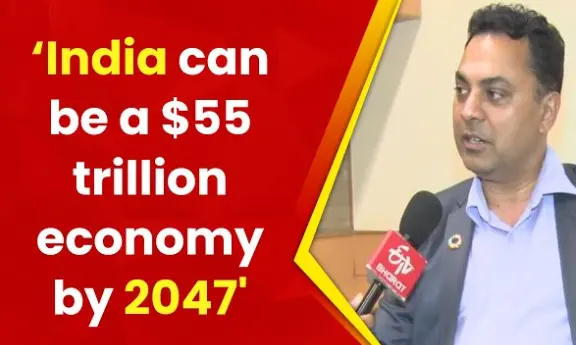
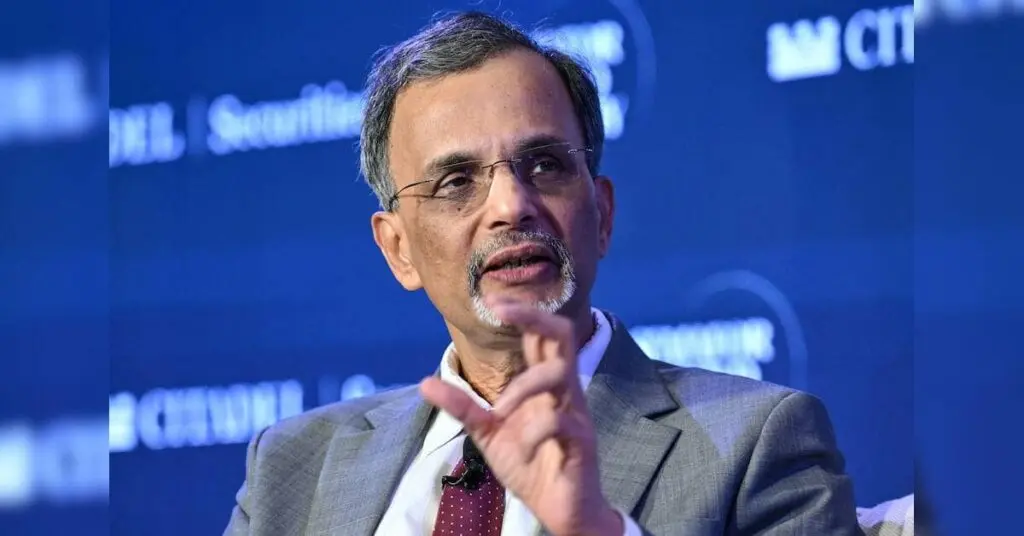
India can build a USD 55 trillion economy by 2047 if it sustains 8 per cent real GDP growth, harnesses its young population in artificial intelligence, and dominates sunrise sectors like space and defence tech, former Chief Economic Adviser Krishnamurthy V Subramanian said. Speaking at the India 2047 Leaders TALK, he argued that compounding growth, ethical wealth creation, and bold structural policy make the target an achievable reality. The IMF estimates India's nominal GDP at USD 3.92 trillion for 2025-26, while the RBI projects 6.7 per cent growth for the current financial year.
A separate Gulf News analysis calls the Viksit Bharat@2047 vision ambitious but argues the next 20 years require five crucial shifts: translating GDP growth into rising per capita incomes, moving from cost-based to value-based manufacturing, using technology to drive productivity across sectors, making cities globally competitive, and strengthening institutions for policy consistency. The analysis notes India already produces the world's second-most mobile phones and defence production has crossed Rs1.4 trillion, but contends sustained competitiveness depends on moving up the value chain through design and research.
Indian Opinion Analysis
Revoi.in frames Subramanian's projection as a credible roadmap driven by compounding growth and policy boldness. Gulf News takes a more probing stance: it calls the foundations strong but shifts the question to whether growth will translate into broad-based prosperity, higher productivity, and stronger institutions. Revoi.in assumes the path is clear, Gulf News names five concrete shifts, from cost-based to value-based competition, from inclusion to productivity, from GDP to per-capita incomes, that will determine the outcome. The difference is one of framing: Revoi.in reports a target as achievable, Gulf News reports the conditions that must still be met. The next test will be whether actual investment and policy execution match the vision, with the RBI's 6.7 per cent growth forecast for the current year providing an early benchmark.
Coverage: 2 sources, 1 pro-government, 1 government-critical
Sources (2): english.revoi.in (pro government), news.google.com (government critical)
This brief was synthesised by AI from the 2 sources linked above, so one read covers every framing they carry. Methodology and corrections.
Updated: this story now draws on 2 sources.