














Now Reading: Indian cashew shell waste tested as marine fuel on cargo ship
-
01
Indian cashew shell waste tested as marine fuel on cargo ship


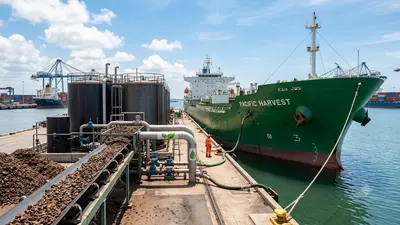
A Danish-Indian company, MASH Makes, is turning discarded cashew shells in Maharashtra into marine fuel and biochar using pyrolysis-gasification technology from the Technical University of Denmark. The company has completed a vessel trial where its biofuel was blended with conventional marine fuel and used in auxiliary engines on a ship sailing between Brazil and Singapore.
The process heats agricultural waste without oxygen to produce fuel, gases, and biochar. Biochar can be returned to farmland to improve water retention and soil microbiology. MASH Makes operates four pyrolysis reactors in Maharashtra, collecting crop residues through a local biomass hub.
The company's model is to deploy many small processing units near agricultural sources rather than one large plant. It also plans to earn revenue from carbon credits. The trial demonstrates that difficult by-products of pyrolysis, such as tar, can be converted into usable marine fuel.
Indian Opinion Analysis
The technology, gasification-pyrolysis, is a well-established method used globally for converting biomass into energy, but its application to agricultural waste like cashew shells for marine fuel is relatively niche. India generates roughly 7-8 lakh tonnes of cashew shell waste annually, most of which is either burned or landfilled, contributing to emissions and soil degradation. The key regulatory enabler here is the International Maritime Organization's (IMO) 2023 strategy to cut shipping emissions by at least 20% by 2030 compared to 2008 levels, which is creating demand for alternative fuels. Whether this pilot scales into a commercial operation will depend on the cost-competing power of biochar as a soil amendment and on the price of carbon credits, which under India's carbon market framework are still not tradeable. The next signal is the company's progress on securing a sustained offtake agreement with a major shipping line.
Source: timesofindia.indiatimes.com
This story was synthesised by AI from the source linked above. Methodology and corrections.