














Now Reading: India’s female vaccinators climb mountains to keep polio at bay
-
01
India’s female vaccinators climb mountains to keep polio at bay


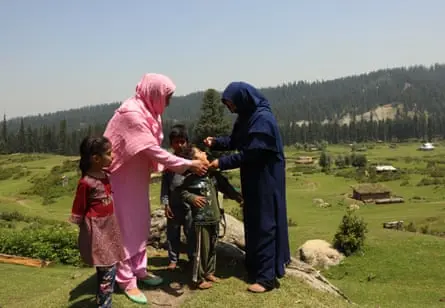
Shameema, 45, and Tanzeela, 28, walk over 20 km a day carrying ice-packed cool boxes to vaccinate Gujjar and Bakarwal children in the pine forests of Pulwama, Kashmir. They are among 2.5 million frontline health workers in India’s polio immunisation campaign, which targets 27 million children under five.
The vaccinators earn Rs 125 a day from the state government for two-day drives held four to six times a year. Shameema has given polio drops to more than 3,000 children in a decade, driven by memory of a boy with a deformed leg from polio.
India has been polio-free since 2014, certified after the last case in West Bengal in 2011. The oral vaccine’s communal immunity is vital in rural Kashmir, where seasonal migration takes pastoral families far from clinics. The surveillance network of 60,000 workers monitors 40,000 reporting sites for paralysis symptoms.
Indian Opinion Analysis
India’s polio-free certification in 2014 came after decades of battling the virus with wall-to-wall vaccination. The oral vaccine used here creates herd immunity by stopping transmission in crowded or water-scarce settlements, exactly the conditions of the Gujjar and Bakarwal camps. The Rs 125 daily pay for vaccinators like Shameema and Tanzeela is less than a farm labourer’s wage, highlighting the reliance on low-paid female health workers who absorb the travel costs and terrain risks. With 27 million children to reach and 60,000 surveillance sites to check, the next national immunisation drive will test whether the cold chain can hold through the Himalayan summer. The next pulse-polio round is expected before year-end, with Kashmir’s nomadic routes as the toughest test.
Source: theguardian.com
This story was synthesised by AI from the source linked above. Methodology and corrections.