











Now Reading: J&K CM Omar Abdullah backs Centre on UPI levy, protects consumers
-
01
J&K CM Omar Abdullah backs Centre on UPI levy, protects consumers



Jammu and Kashmir Chief Minister Omar Abdullah on Wednesday backed the Centre's decision to impose a 0.4 percent merchant discount rate on UPI payments above Rs 2,000, saying the digital payment infrastructure…
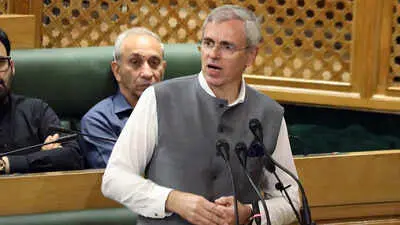
Jammu and Kashmir Chief Minister Omar Abdullah on Wednesday backed the Centre's decision to impose a 0.4 percent merchant discount rate on UPI payments above Rs 2,000, saying the digital payment infrastructure is expensive to run. He stressed that person-to-person transfers carry no charge and individual consumers will only be charged above a specific ceiling.
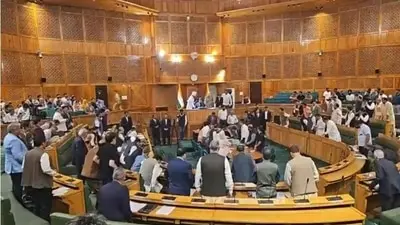
Abdullah said the government must ensure ordinary citizens are spared the fees while companies, which profit substantially through UPI, can be charged. On the upcoming seven-day Assembly session, he said the priority is smooth functioning and satisfactory responses to MLAs from both benches. The new MDR takes effect October 15, with banks directed not to pass the charge to consumers.
Indian Opinion Analysis
Omar Abdullah's support for the UPI levy is reported with near-identical facts by The Hindu, Rediff, and Times of India, all drawing from his press conference. The Hindu and Rediff focus on his balancing act: backing the Centre for infrastructure costs while insisting ordinary citizens be spared. Times of India foregrounds a soundbite on not appreciating free services, then juxtaposes Rahul Gandhi's criticism of the levy as a "tax" on citizens, giving the story an opposition-versus-government tension the others lack. The difference is one of balance: Times of India frames the UPI move as contested, while The Hindu and Rediff treat it as a settled policy point. The new 0.4 percent MDR on large transactions takes effect October 15, and banks have been directed not to pass charges to consumers.
Coverage: 3 sources, 2 neutral, 1 sensationalist
Sources (3): rediff.com (neutral report), thehindu.com (neutral report), timesofindia.indiatimes.com (sensationalist)
This brief was synthesised by AI from the 3 sources linked above, so one read covers every framing they carry.
Updated: this story now draws on 3 sources.