











Now Reading: Income tax notice: 6 reasons and how to spot a fake
-
01
Income tax notice: 6 reasons and how to spot a fake


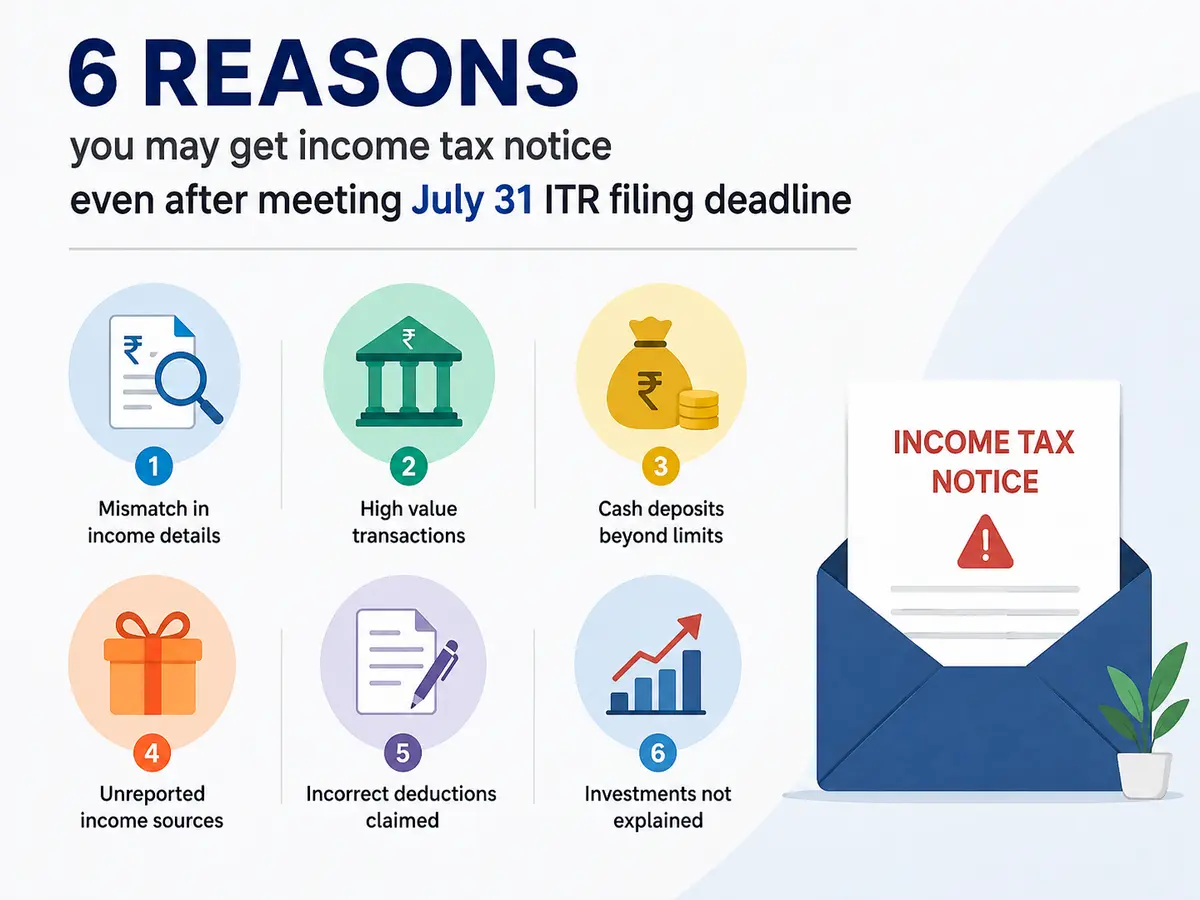
Filing your income tax return before the July 31, 2026 deadline does not guarantee you will not receive a notice. The Income Tax Department sends alerts for six common reasons: mismatch between…
The Story in Brief
Filing your income tax return before the July 31, 2026 deadline does not guarantee you will not receive a notice. The Income Tax Department sends alerts for six common reasons: mismatch between reported salary and Form 16 or AIS; unreported interest from savings accounts, FDs or RDs; claiming higher TDS or TCS credit than shown in Form 26AS; large cash transactions not backed by declared income; capital gains errors from sale of shares, mutual funds or property; and discrepancies in any other income reported across documents.
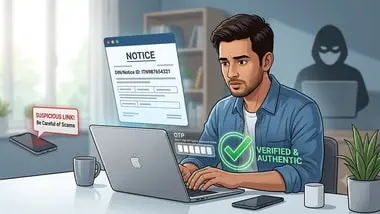
Before responding to any notice, taxpayers should verify its authenticity. The e-filing portal offers a pre-login 'Authenticate Notice/Order' facility. You can check using your PAN, document type, assessment year, date of issue and a mobile number, or directly with the Document Identification Number (DIN) and a mobile number. A notice without a valid DIN issued after October 1, 2019 is generally invalid. This step helps avoid scams and fraudulent demands.
The Indian Opinion
The income tax department's focus on data matching through AIS and DIN has caught many honest taxpayers off guard. While the system helps catch evasion, it also punishes small errors like forgetting to report Rs 10,000 in savings account interest. The real test is not how many notices are sent, but how quickly genuine mistakes are resolved without harassment. Will the department introduce a simplified rectification process for minor mismatches, or will every small error still require a visit to the portal? That answer will show whether the system is truly reformed.
Sources (2): economictimes.indiatimes.com, livemint.com
This story was synthesised by AI from the 2 sources linked above.
Updated: this story now draws on 2 sources.