



















Now Reading: Agrivoltaics dual-use land model gains ground in Colorado
-
01
Agrivoltaics dual-use land model gains ground in Colorado


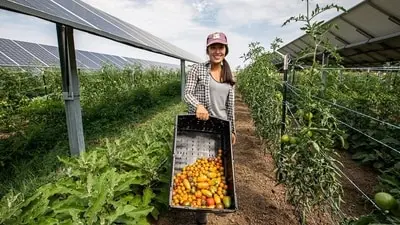
Agrivoltaics, the dual use of land for agriculture and solar energy generation, is proving successful in Colorado with several large-scale projects now operational. The model involves raising solar panels higher off the…
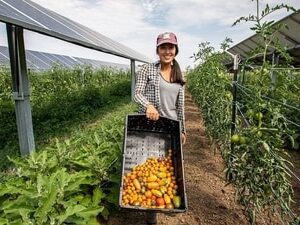
Agrivoltaics, the dual use of land for agriculture and solar energy generation, is proving successful in Colorado with several large-scale projects now operational. The model involves raising solar panels higher off the ground or spacing them wider apart to allow farming or grazing underneath, unlike traditional solar farms that fence off land. Projects include Jack's Solar Garden, a five-acre 1.2 MW community solar garden, and the IBM Boulder campus with a 10 MW capacity powering 2,200 homes annually.
The approach offers benefits: panels provide shade reducing crop heat stress and soil moisture loss, farmers earn from electricity generation while still producing food, and plant transpiration cools panels improving efficiency. India has 50 operational pilot projects, with ICAR-CAZRI in Jodhpur achieving a Land Equivalent Ratio of 1.41, meaning combined output from one hectare matched 1.41 hectares of separate land.
Indian Opinion Analysis
India's agrivoltaic push faces different constraints than Colorado's arid climate. The Indian Council of Agricultural Research estimates national potential at 3,200 GW to 14,000 GW, but scaling requires resolving land lease terms and grid connectivity issues that have stalled earlier renewable projects. The Jodhpur pilot's Land Equivalent Ratio of 1.41 is promising, but replication across states with varying cropping patterns and solar irradiance will determine viability. The Ministry of New and Renewable Energy's next policy framework on agrivoltaics, expected by late 2026, will clarify subsidy structures and land-use norms that decide whether pilots scale.
Source: hindustantimes.com
This brief was synthesised by AI from the source linked above.