










Now Reading: Brazil fossil shows ancient snakes occupied land, water and underground
-
01
Brazil fossil shows ancient snakes occupied land, water and underground

Brazil fossil shows ancient snakes occupied land, water and underground


A three-dimensionally preserved snake fossil from Brazil has given scientists fresh evidence that early snakes occupied varied habitats. Named Tametara mirim, the 80-million-year-old specimen is the first articulated Cretaceous snake fossil found…
The Story in Brief
A three-dimensionally preserved snake fossil from Brazil has given scientists fresh evidence that early snakes occupied varied habitats. Named Tametara mirim, the 80-million-year-old specimen is the first articulated Cretaceous snake fossil found in Brazil, The Times of India reports. Its intact skull and skeleton allowed researchers to reconstruct the animal’s brain in unusual detail using computed tomography and 3D rendering.
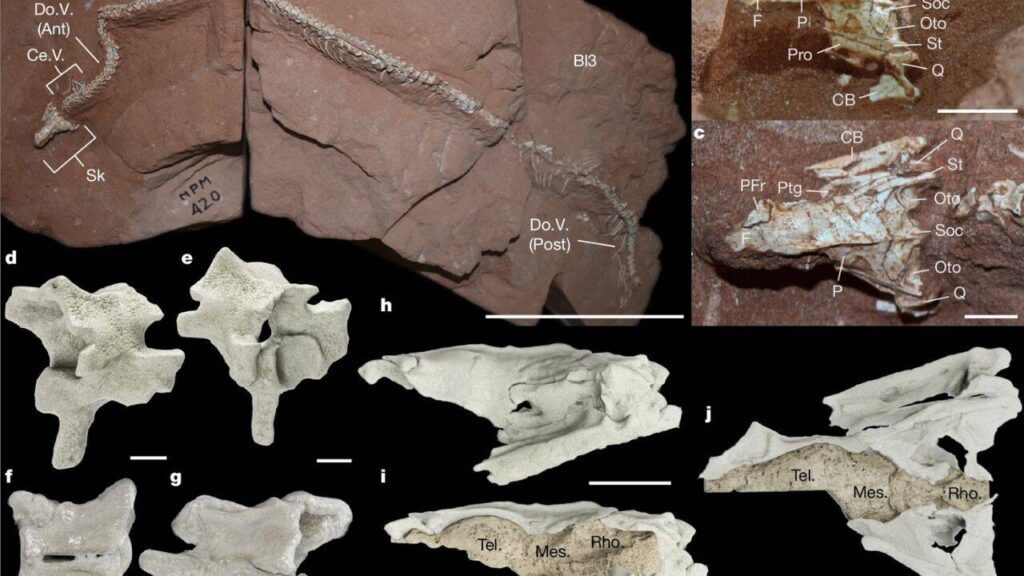
Published in Nature, the study found that Tametara’s brain shape and bone structure matched a burrowing lifestyle. Comparisons with the terrestrial Dinilysia patagonica, along with fossils from marine sediments, indicate that separate snake lineages were already adapted to underground, land and marine environments by the Late Cretaceous. The findings add evidence to a long-running debate over snake origins.
The Indian Opinion
The loudest version of this story may claim one fossil has solved every mystery about snake evolution. That goes too far. Tametara is important because its rare preservation links brain anatomy with likely behaviour, but the wider conclusion also rests on comparisons with other fossils and marine evidence. Nor does a burrowing species prove all early snakes lived underground. The useful test is whether more three-dimensional fossils support the same ecological pattern, rather than another headline built around a single specimen.
Source: timesofindia.indiatimes.com
This story was synthesised by AI from the source linked above.