









Now Reading: World’s largest solar telescope spots tiny vortices on Sun
-
01
World’s largest solar telescope spots tiny vortices on Sun



Observations from the Daniel K. Inouye Solar Telescope (DKIST) have revealed tiny swirling structures on the Sun's surface at a scale of about 19 kilometres, the smallest ever seen. The findings, published…
The Story in Brief
Observations from the Daniel K. Inouye Solar Telescope (DKIST) have revealed tiny swirling structures on the Sun's surface at a scale of about 19 kilometres, the smallest ever seen. The findings, published in Nature, show vortices forming around magnetic regions, with sizes ranging from 25 to 170 kilometres and moving at speeds between 0.67 and 3 km per second.
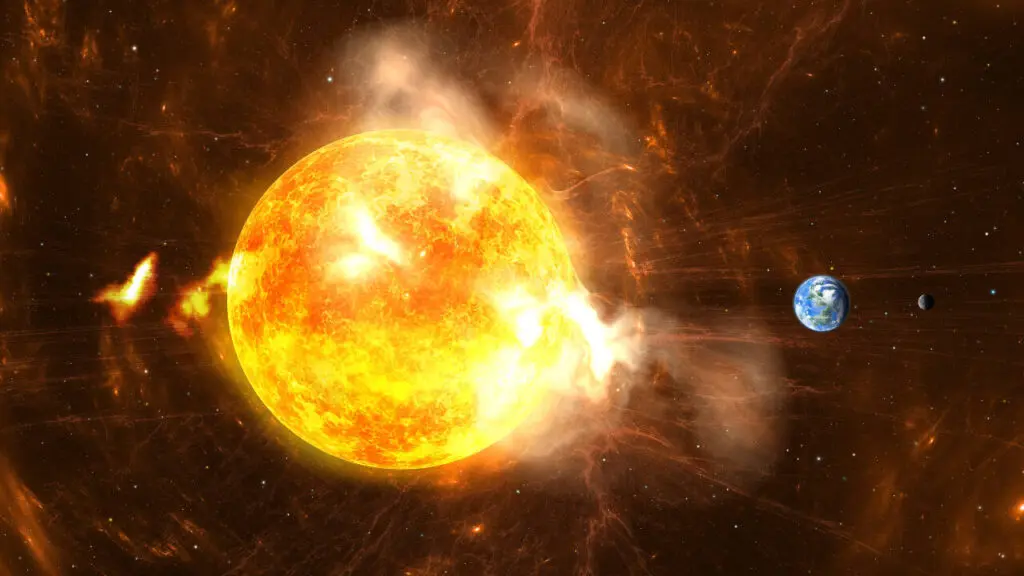
Scientists attribute these swirls to the Kelvin-Helmholtz instability, which occurs when fluid layers move at different speeds. Computer simulations matched the observed shapes and behaviour, confirming the cause. The discovery could help explain how energy and magnetic fields flow through the solar atmosphere.
The Indian Opinion
The hype around 'tiny vortices' risks burying the real story: this is the first direct look at a process scientists predicted decades ago. The 47-vortex sample is small, but the match with simulations is a strong check. The test to watch: whether these swirls actually alter how magnetic energy is stored and released in active regions. If they do, space weather forecasting gets a new tool. If not, it is a pretty picture with limited payoff.
Source: timesofindia.indiatimes.com
This story was synthesised by AI from the source linked above.
Updated: this story now draws on 1 sources.