














Now Reading: Big Tech AI spend hits $165 bn as enterprises seek value
-
01
Big Tech AI spend hits $165 bn as enterprises seek value



Big Tech's combined AI capital expenditure reached $165 billion in Q2 2026, while free cash flow shrank to $7 billion from $60 billion in Q4 2025, Jefferies reports. The research firm expects…
The Story in Brief
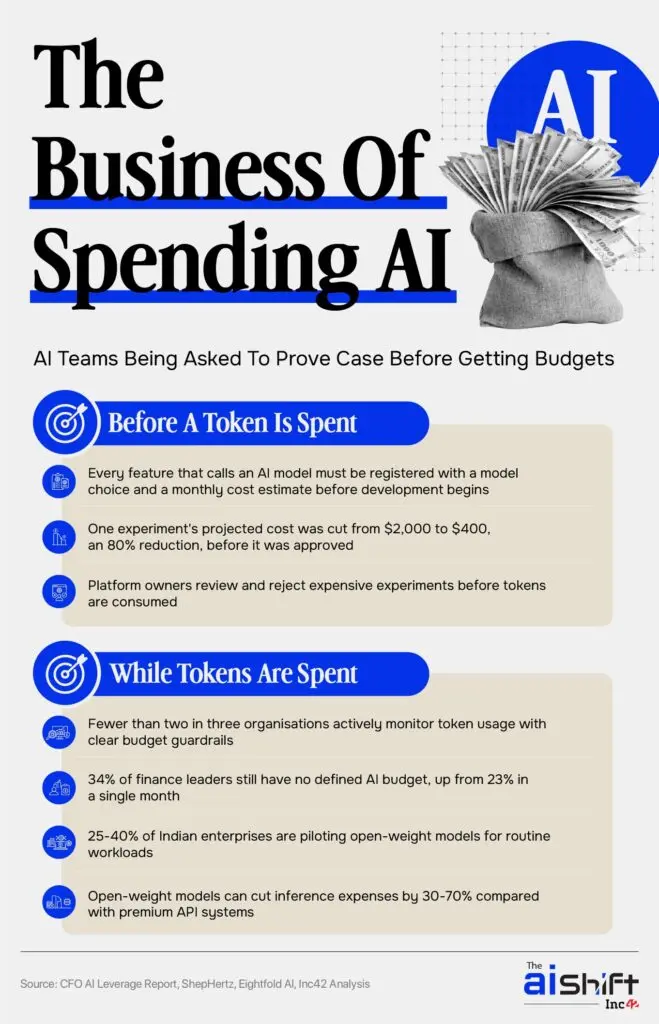
Big Tech's combined AI capital expenditure reached $165 billion in Q2 2026, while free cash flow shrank to $7 billion from $60 billion in Q4 2025, Jefferies reports. The research firm expects free cash flow to turn negative at -$12 billion in Q3 2026. Meanwhile, the cost of processing AI tokens is falling roughly 10X every year, with DeepSeek's V4 Flash charging $0.14 per million input tokens and OpenAI's GPT-5.6 Luna at $0.20. But inc42 reports enterprises are now focusing on value over cost: teams must justify AI spending through budget requests and productivity gains. Indian firms are piloting cheaper open-weight models, cutting inference costs by 30-70% in some cases, though compliance and data governance remain barriers.
The Indian Opinion
The narrative that AI is a bottomless money pit ignores how falling token costs and value-based budgeting are reshaping enterprise adoption. While Big Tech's $165 billion capex and shrinking free cash flow fuel bubble fears, Jefferies notes that infrastructure suppliers profit now and cloud revenue grew 38% to $126 billion. Indian enterprises are cautiously testing cheaper models but demand clear returns. The real test will be Q3 2026's free cash flow figure, if cloud growth sustains, the investment may yet justify itself.
Sources (2): inc42.com, businesstoday.in
This story was synthesised by AI from the 2 sources linked above.
Updated: this story now draws on 2 sources.