













Now Reading: Parliament passes Bill tightening delayed birth, death registrations
-
01
Parliament passes Bill tightening delayed birth, death registrations



Parliament has passed the Registration of Births and Deaths (Amendment) Bill, 2026, tightening rules for delayed registration. The Rajya Sabha cleared it by voice vote on Tuesday after the Lok Sabha passed…
The Story in Brief
Parliament has passed the Registration of Births and Deaths (Amendment) Bill, 2026, tightening rules for delayed registration. The Rajya Sabha cleared it by voice vote on Tuesday after the Lok Sabha passed it on July 31 amid opposition protests, without debate. The Bill requires an order from a district or executive magistrate for registrations delayed beyond one year but within two years. For delays over two years, a judicial magistrate of the First Class must verify and permit registration, along with a prescribed fee.
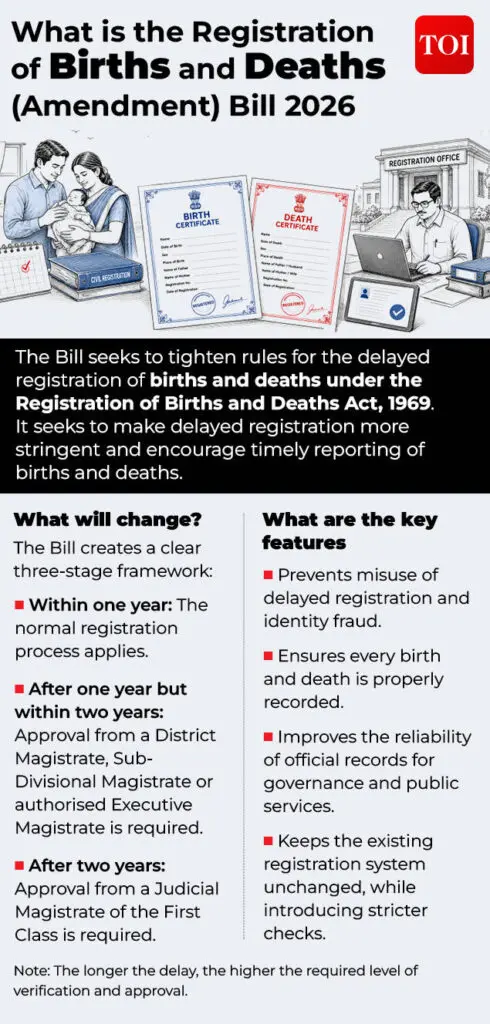
The government says the aim is to prevent fraudulent entries and improve the reliability of official records. Birth certificates are used for identity proof, passports, and citizenship-related documentation. Union minister Nityanand Rai noted that birth registration rose from 86.6% in 2014 to 99.1% in 2024. The Act already makes registration mandatory.
The Indian Opinion
The Bill's critics will paint it as a tool for citizenship scrutiny, but the government's argument about preventing fraudulent entries is legitimate given rising registration rates. The real test is whether the new magistrate-based verification process will actually discourage fake registrations or just create more red tape for ordinary people. Will the prescribed fee be reasonable? And will the system distinguish between genuine delays and suspect ones? The number of cases rejected after verification will be the true measure.
Source: timesofindia.indiatimes.com
This story was synthesised by AI from the source linked above.