























Now Reading: The Mountbatten Plan set Partition in motion on June 3, 1947
-
01
The Mountbatten Plan set Partition in motion on June 3, 1947


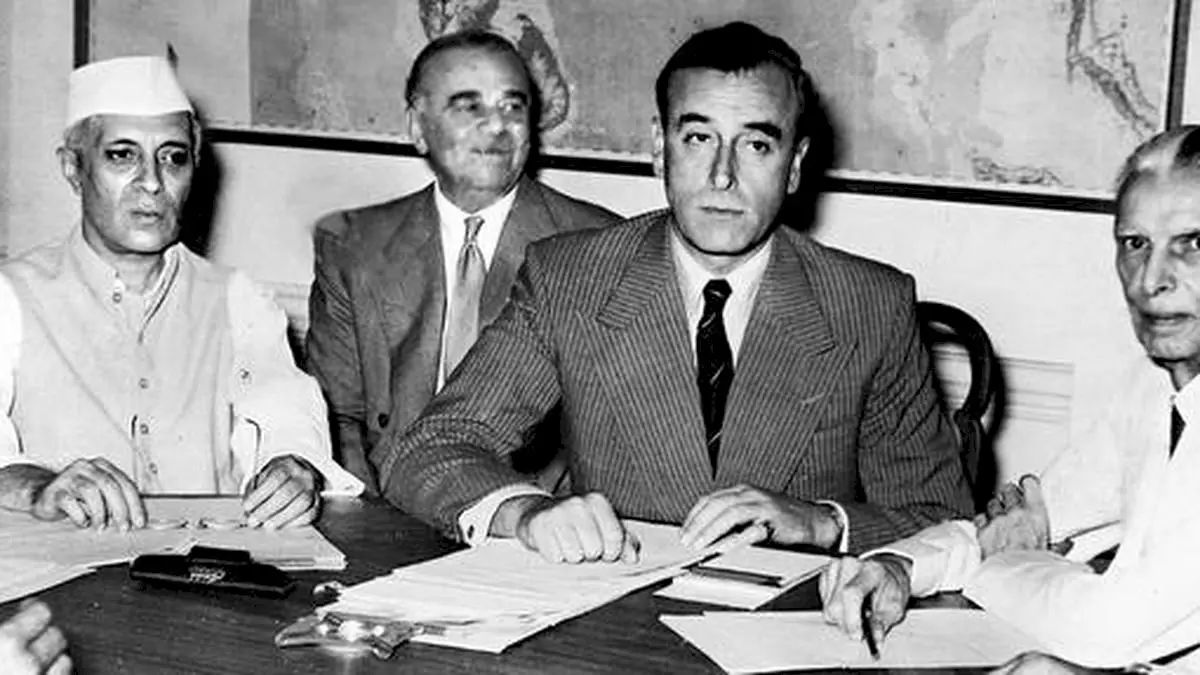
On June 3, 1947, the British government proposed a plan to partition colonial India, known as the Mountbatten Plan after Viceroy Lord Mountbatten. The proposal followed several rounds of discussions and led…
The Story in Brief
On June 3, 1947, the British government proposed a plan to partition colonial India, known as the Mountbatten Plan after Viceroy Lord Mountbatten. The proposal followed several rounds of discussions and led to the Indian Independence Act of 1947.
Passed by the British Parliament, the Act fixed August 15, 1947, for the transfer of power and formally ended British rule. The Partition brought communal violence and displaced millions, making it one of the most devastating partitions in history. The Hindu published this account on June 3, 2026, alongside an archival photograph of Mountbatten with Jawaharlal Nehru and M.A. Jinnah.
The Indian Opinion
Claims that Partition was either an unavoidable outcome or the work of one individual flatten a complicated political process. The plan emerged after discussions involving British authorities and Indian leaders, but its human cost cannot be separated from the constitutional decision. The useful test is less about assigning a single villain than asking whether the promised transfer of power justified the violence and displacement that followed.
Source: thehindu.com
This story was synthesised by AI from the source linked above.